The Korean Lash Lift in Seoul: What $30 Actually Buys
A gentler formula, a shield fitted to your eye, and six to eight weeks of lift — for a fifth of what the same appointment costs in the US.
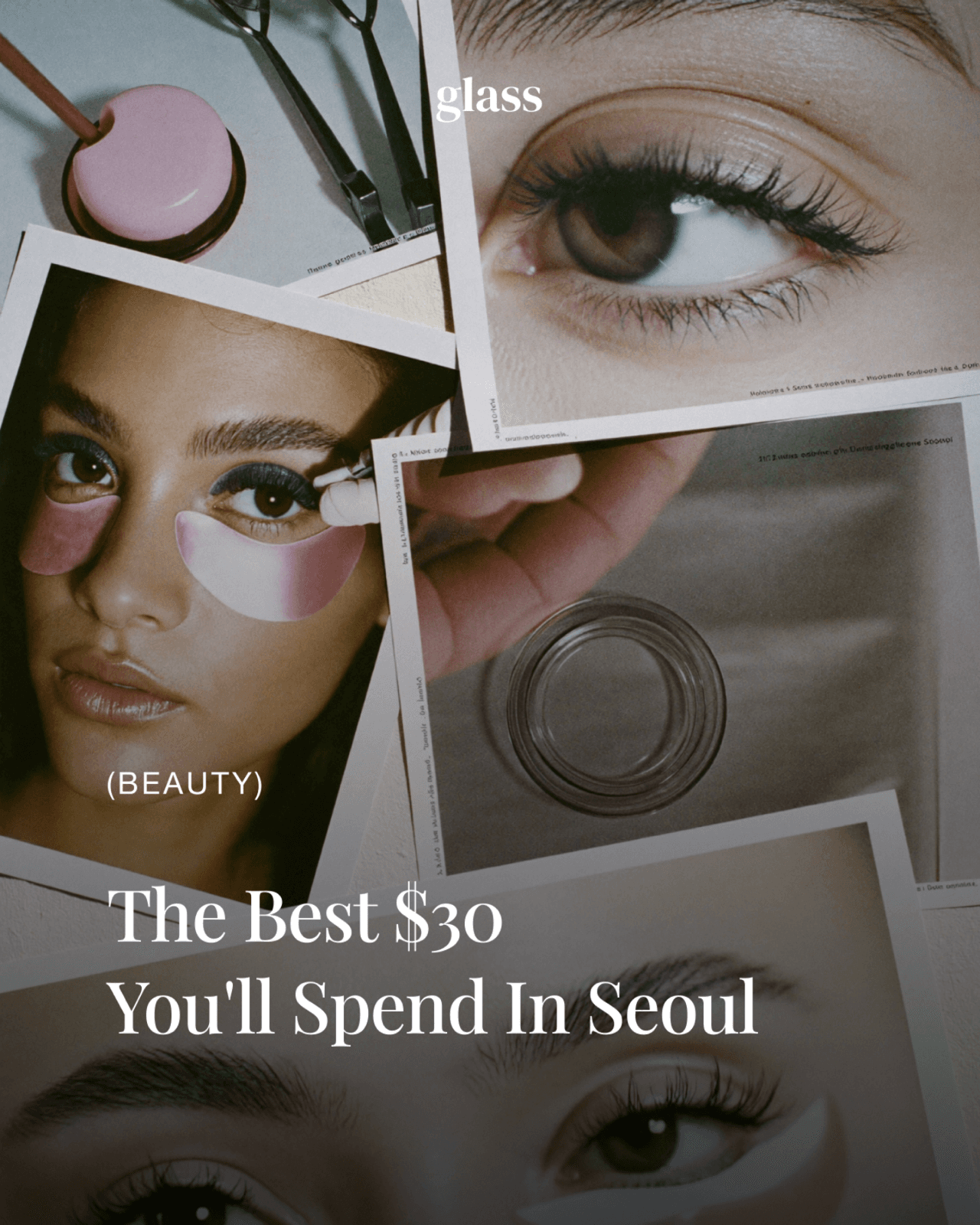
A Korean lash lift in Seoul costs about ₩35,000 — roughly $25, sometimes $30 by the time you add a tint. The same appointment in the United States runs $75 to $150. Nothing about the treatment changes across that gap. The lashes are yours either way, the solution is the same chemistry, and the chair is just as reclined.
What changes is who does it and how often. Seoul lash technicians run this treatment all day, every day, and the version they run — the one going around right now as the Korean lash lift — is a different formula and a different shape than the perm most Americans have heard of. It takes under an hour. It holds for six to eight weeks. Booked on the first morning of a trip, it covers the whole trip and most of the month after you get home.
Here's what the treatment actually is, why the Korean version is built differently, what it costs by neighborhood, and where it fits in a travel itinerary — because the aftercare rules decide that for you.
It Is Not Extensions
This is the part people mix up, and the confusion costs money.
Extensions glue synthetic hairs onto your natural lashes, one by one. They look dramatic on day one, they shed as your own lashes shed, and they need a fill every two to three weeks to stay even. Miss a fill and the set goes patchy. Skip removal and take them off yourself, and some of your own lashes come with them.
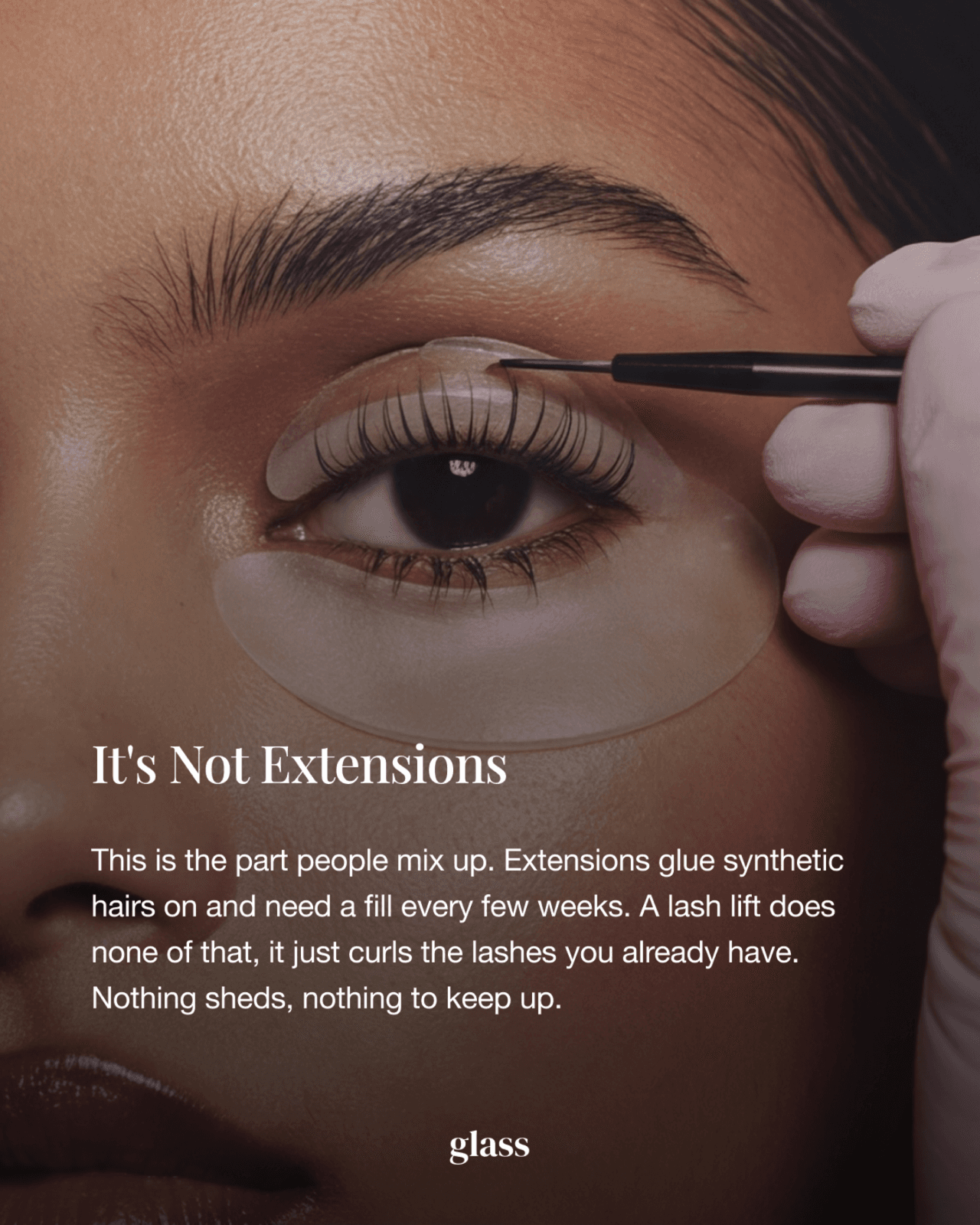
A lash lift touches none of that. There is no synthetic hair, no adhesive holding anything on, and nothing to refill. A technician rests your lashes on a silicone shield, applies a solution that softens the bonds inside the lash, and reshapes the curl from the root up. Your lashes are the same lashes. They are simply pointing up instead of straight ahead.
The difference shows up in the maintenance column, not the mirror.
| Korean lash lift | Lash extensions | |
|---|---|---|
| What's on your lashes | Nothing — your own, reshaped | Synthetic hairs, glued on |
| Seoul price | ₩35,000–70,000 ($25–50) | Varies by set, typically 2–3× more |
| Appointment | 45–60 minutes | 90–120 minutes for a full set |
| How long it holds | 6–8 weeks, one lash growth cycle | Needs a fill every 2–3 weeks |
| Upkeep between visits | None | Fills, careful washing, no oils |
| When it ends | Grows out unnoticed | Goes patchy as lashes shed |
The lift wins on a trip for one reason: it has no maintenance schedule. You fly home and it keeps working. A set of extensions books you into a salon in your own city three weeks later, at your own city's prices.
One hard rule works in both directions — you cannot lift lashes that are wearing extensions. The solution has to reach your natural lash. If you have a set on, it has to come off first, professionally, before anyone can lift what's underneath.
Why the Korean Version Is Different
Two things, and both of them are technical rather than cosmetic.
01. The solution is a different chemical
The lash perm most of the world has run for years uses thioglycolic acid. It works fast — the first step processes in five to nine minutes — and it works at a high pH. That speed comes with a cost. TGA is aggressive enough that technicians are trained to keep it off the ends of the lash, where the hair is oldest and most porous, because that's where it leaves lashes dry and brittle.
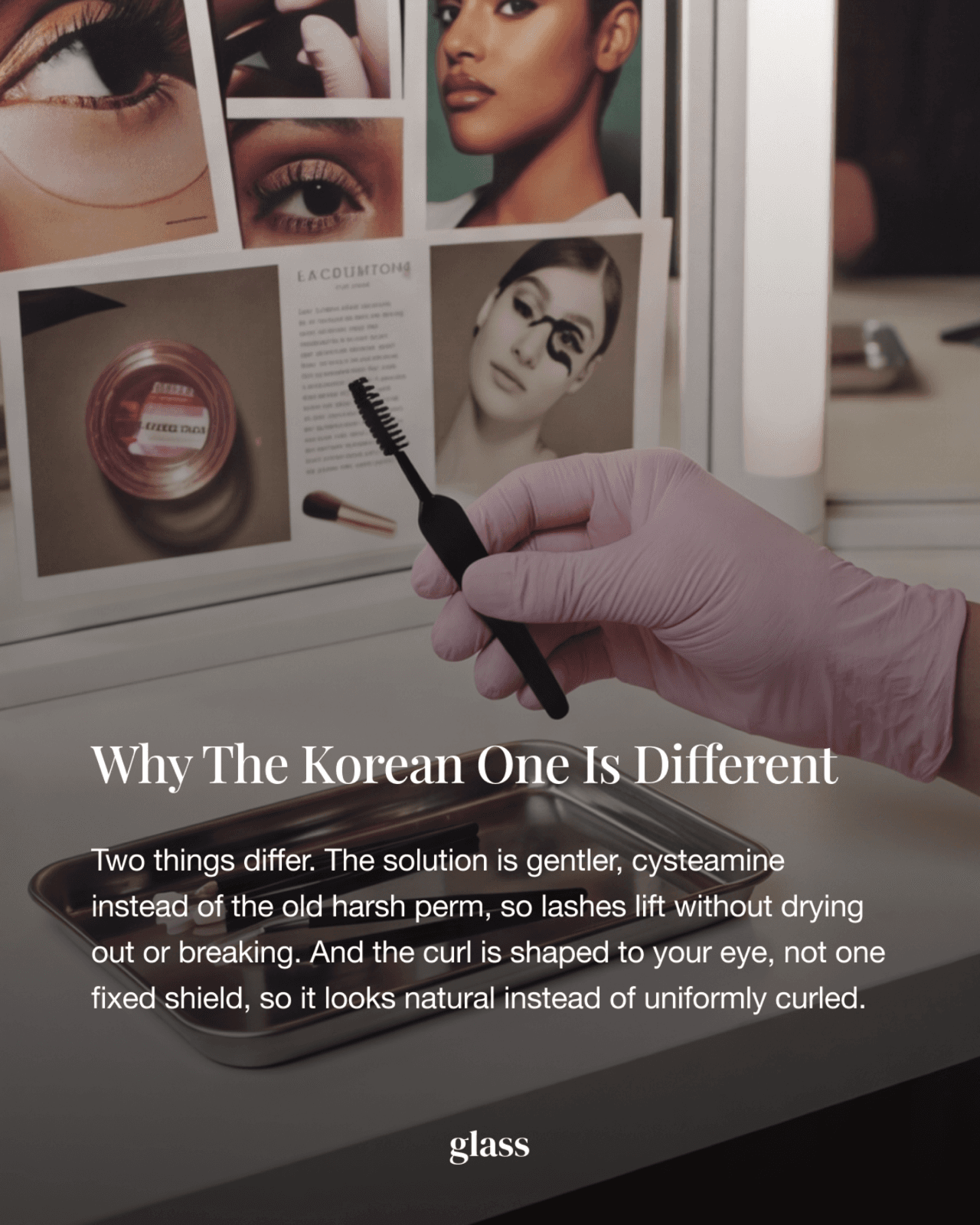
The Korean method uses cysteamine hydrochloride instead. It sits at a lower pH, it processes more slowly, and it is mild enough to be brushed along the entire lash rather than only at the base — the same way brow lamination is applied. Full-length coverage is what produces a true lift from root to tip instead of a kink near the base. Korean formulas typically follow it with a pH-balancing step and a conditioning serum carrying hyaluronic acid and glycerin.
That is the whole answer to the question people actually ask, which is why doesn't this wreck my lashes the way a perm does. It's a gentler acid applied to more of the hair, given more time.
02. The curl is fitted, not standard
The second difference is the shield. A lash lift's curl is decided by the silicone pad your lashes are pressed against, and most salons carry three or four sizes.
In Korea there are close to twenty versions of the lash pad — different heights, different curl angles, different shapes for the inner and outer corner. A technician picks the one that matches your eye shape and the lash length you actually have. Someone with a hooded lid gets a different shield than someone with a deep-set eye or a downturned outer corner. There is a version that produces the soft downward flick Korean salons call a puppy-eye finish, and a version that goes nearly vertical.
Fitting the shield to the eye is what keeps the result from reading as a treatment. A single standard shield curls every lash to the same angle, which is the uniform, surprised look people mean when they say a lash lift went wrong. A fitted one opens the eye and stops there.
Korean Lash Lift vs a Keratin Lash Lift
The keratin lash lift is the one most US salon menus put next to the Korean version, and the two names point you at the wrong comparison. "Keratin" describes the finish — a step added to the lash after it has been reshaped. It says nothing about what did the reshaping. Many keratin systems still lift with thioglycolic acid, the fast, high-pH chemistry the Korean method moved away from.
So these aren't rival methods. They answer two different questions. "Korean" is an answer about the solution and the shield. "Keratin" is an answer about the last step. Seoul salons list a keratin treatment as an add-on to the lift, which tells you how they sort it — the lift is the treatment, the keratin is an extra line on the receipt.
Choosing between two menu items with those names comes down to one question for the technician: which solution lifts the lash? That answer tells you more than either label.
What an At-Home Korean Lash Lift Kit Can and Can't Copy
Search for a Korean lash lift kit and you'll find boxes carrying the name, some with cysteamine on the ingredient list. A kit can copy half of what makes the Korean version different — the chemistry. If the label reads cysteamine hydrochloride rather than thioglycolic acid, the solution is the Korean kind.
The other half doesn't fit in a box. The fitted curl comes from a technician looking at your eye — hooded lid, deep-set, downturned outer corner — and choosing from close to twenty shields to match it. A kit holds whichever shields it shipped with, and the person doing the choosing is you, in a mirror, with one eye closed. That choice is the entire gap between a curl that opens the eye and the uniform, surprised angle described above.
The first 24 hours don't change either way — lashes dry, no eye makeup, no heavy sweating — and neither does the water-based mascara rule for the full six to eight weeks.
What It Costs in Seoul
You can get a lash lift almost anywhere now. The price is what makes Seoul the place to do it.
| Area | Price | Appointment |
|---|---|---|
| Gangseo | ₩35,000 (~$25) | 60 min |
| Samseong | ₩40,000 (~$29) | 60 min+ |
| Hongdae | ₩40,000–55,000 (~$29–40) | 55–60 min |
| Gangnam | ₩50,000–70,000 (~$36–50) | 45–60 min |
| United States, for comparison | $75–150 | ~90 min |
Prices are 2026 rates from English-supporting salons on Seoul booking platforms. Add-ons — a black tint, keratin treatment, lower lashes — run on top.
Two notes on reading that table. Gangnam is the top of the range and not the top of the skill; the neighborhood carries a rent premium that has nothing to do with your lashes. And the tint is worth the add-on if your lashes are light, but understand its timeline — the tint fades in about three weeks while the curl holds for six to eight. The second half of the result is lift only.
If You Searched "Korean Lash Lift Near Me"
The Korean lash lift has left Seoul. US salons now book it under the same name, and the table above puts the difference in numbers: $75 to $150 and about ninety minutes at home, against $25 to $50 and under an hour in Seoul.
The name travels faster than the method. "Korean lash lift" on a salon menu tells you the look being aimed at, not the product in the bottle. Before you book one near you, ask two things:
- Which solution lifts the lash — and what is the product called? You're listening for cysteamine hydrochloride, and for a named product rather than a technique label.
- How many shields do you work with? Three or four sizes is a standard lift under a new name. A range chosen by eye shape is the Korean method.
If both answers come back right, the only things Seoul still has over your neighborhood are the price and the repetition behind it. If you're already flying there, that's worth one morning of the trip.
When to Book It on a Seoul Trip
The instinct is to book it on day one, and that instinct is right — but the aftercare rules decide which day one works.
For the first 24 hours, the reshaped bonds are still setting. That means:
- No water on the lashes. Not a shower stream on your face, not steam, not rain.
- No mascara or eye makeup, and no other eye treatments.
- No heavy sweating. Salt and moisture interfere with the set the same way water does.
Read that list against a Seoul itinerary and one conflict jumps out: a jjimjilbang is a 24-hour rule violation in three separate ways. So is a hot spring day trip, a summer hike up Bukhansan, and any long afternoon in August humidity. Book the lift for a morning followed by an indoor day — museums, Seongsu, shopping in Myeongdong — and put the bathhouse later in the week.
The other planning detail is booking itself. Many Seoul lash salons that support English take reservations one to two days ahead, and some require it. Walking in on arrival morning is not a plan. Book it from the plane or the night before you fly.
After the first 48 hours, the rules relax almost entirely. Mascara is fine — with one restriction that outlives the trip. Waterproof and oil-based mascaras stay off for the full six to eight weeks, because the removers they require are oil-based, and oil breaks down a lash lift as efficiently as it breaks down mascara. Water-based formulas only. Most people find they stop reaching for it anyway, which was the point.
Korean Lash Lift Aftercare, Start to Finish
Everything above, in the order you'll live it. Nothing here is new — it's the same rules, laid out as a timeline you can screenshot before the appointment.
| When | What to do | Why |
|---|---|---|
| First 24 hours | Keep lashes dry. No eye makeup, no other eye treatments, no heavy sweating | The reshaped bonds are still setting, and salt and moisture interfere the way water does |
| Hours 24–48 | Mascara is possible after the first 24 hours, and 48 is the safer line | The rules relax almost entirely, but 48 leaves no room for error |
| Weeks 1–8 | Water-based mascara only. No waterproof or oil-based formulas | Their removers are oil-based, and oil breaks down a lash lift as efficiently as it breaks down mascara |
| Around week 3 | A tint, if you added one, fades | The tint fades in about three weeks while the curl holds for six to eight |
| Weeks 6–8 | The curl grows out with your lashes | One lash growth cycle, with nothing to fill or remove |
Two things that keep the aftercare simple: there is no maintenance step between visits, and the only product decision is the mascara formula.
The Glass Beauty Seoul Take
The price gap is not an exchange rate story. It's a volume story.
Seoul salons run this treatment dozens of times a day in a city where a lash lift is closer to a haircut than to a splurge, and that density does two things at once: it drives the price down and it makes the technician fast. The person lifting your lashes has done it more times this month than most American lash artists do in a season. That's the actual import — not the discount, the repetition behind it.
Keep the expectation honest about what it is. This is a salon service, not a clinic procedure. It will not lengthen your lashes, it will not thicken them, and it will not do anything for the skin around your eye. What it does is take the lashes you have and point them up for two months, which is a smaller promise than most beauty treatments make and one of the few that gets kept.
If you are already flying to Seoul for a facial or a clinic appointment, this is the easiest thing on the itinerary — no consultation, no downtime, no follow-up. It's also the right way to test the city's beauty economy before you commit to anything larger. Spend the $25 on the first morning. If the result changes how you think about what a beauty appointment should cost and how long it should take, the clinic side of Seoul works the same way, on a bigger scale.
Glass Beauty Seoul is building the guide to Korean skin and beauty for the rest of the world — what works, what it costs, and how to get it done in Seoul. Follow along as we break down every treatment, one honest article at a time.
Questions.
How much is a Korean lash lift in Seoul?+
Between 35,000 and 70,000 KRW, or about $25 to $50, at English-supporting salons in 2026. Gangseo and Samseong sit at the bottom of that range, Gangnam at the top, and the appointment runs 45 to 60 minutes. The same treatment costs $75 to $150 in the United States. Add-ons like a black tint, keratin treatment, or lower lashes are priced on top.
How long does a Korean lash lift last?+
Six to eight weeks, which is roughly one natural lash growth cycle. There is nothing to fill or maintain in between - the curl simply grows out as your lashes shed and are replaced. If you add a tint, note that the color fades in about three weeks while the lift keeps holding.
What is the difference between a Korean lash lift and a regular lash lift?+
The solution and the shield. A standard lash lift uses thioglycolic acid, which processes in five to nine minutes at a high pH and has to be kept off the ends of the lash to avoid brittleness. The Korean method uses cysteamine hydrochloride at a lower pH, mild enough to brush along the entire lash for a true root-to-tip lift. Korean salons also stock close to twenty silicone shields, so the curl is fitted to your eye shape rather than set to one standard angle.
Can I get a Korean lash lift if I have eyelash extensions?+
Not while the extensions are on. A lift works by reshaping your natural lash, and the solution has to reach it, so any existing set has to be professionally removed first. Book the removal and the lift as separate appointments, and give the removal to someone who does it with a proper solvent rather than pulling.
When can I wear mascara after a lash lift?+
After the first 24 hours, and 48 is safer. The one restriction that lasts the full six to eight weeks is formula: water-based mascara only. Waterproof and oil-based formulas require oil-based removers, and oil breaks down a lash lift as efficiently as it breaks down mascara.
What is the aftercare for a Korean lash lift?+
For the first 24 hours keep the lashes dry, skip eye makeup and other eye treatments, and avoid heavy sweating, since the reshaped bonds are still setting. After that the rules relax almost entirely, and 48 hours is the safer line for mascara. For the full six to eight weeks, use water-based mascara only, because waterproof and oil-based formulas need oil-based removers that break down a lash lift.