Can You Shrink Your Pores? What Works and What Doesn't
Pore size is genetic. How big pores look is not. Here is what to skip, what to start at home and what to book.

Every pore product promises to shrink them. None can. Pore size is mostly genetic, and no cream, strip or tool changes the opening you were born with.
What you can change is how big your pores look — and that part is simpler than the marketing makes it sound. This guide covers what makes pores stand out, which popular fixes to skip, what to start at home, and when an in-office treatment is worth booking.
Pores Can't Shrink, But They Can Look Smaller

Cleveland Clinic is direct about it: because pore size is mostly a result of genetics, you can't permanently shrink your pores. What you can do is keep them clear of oil and debris and support the collagen around them.
Four things make pores more visible:
- Collagen loss. Collagen and elastin give pores their structural support. Lose them with age and the pores widen.
- Sun damage. UV rays break down collagen and elastin, which reduces firmness and lets pores look larger.
- Oil. Pores show most in the center of the face, where oil glands are concentrated.
- Clogs. The AAD notes that when pores clog, they expand, which makes them more noticeable.
Two of those four are in your control. Oil and clogs respond to the right products. Collagen loss and sun damage respond to protection and, later, treatment.
Pore Fixes to Skip
Three habits show up in almost every pore routine. None of them earns its place.
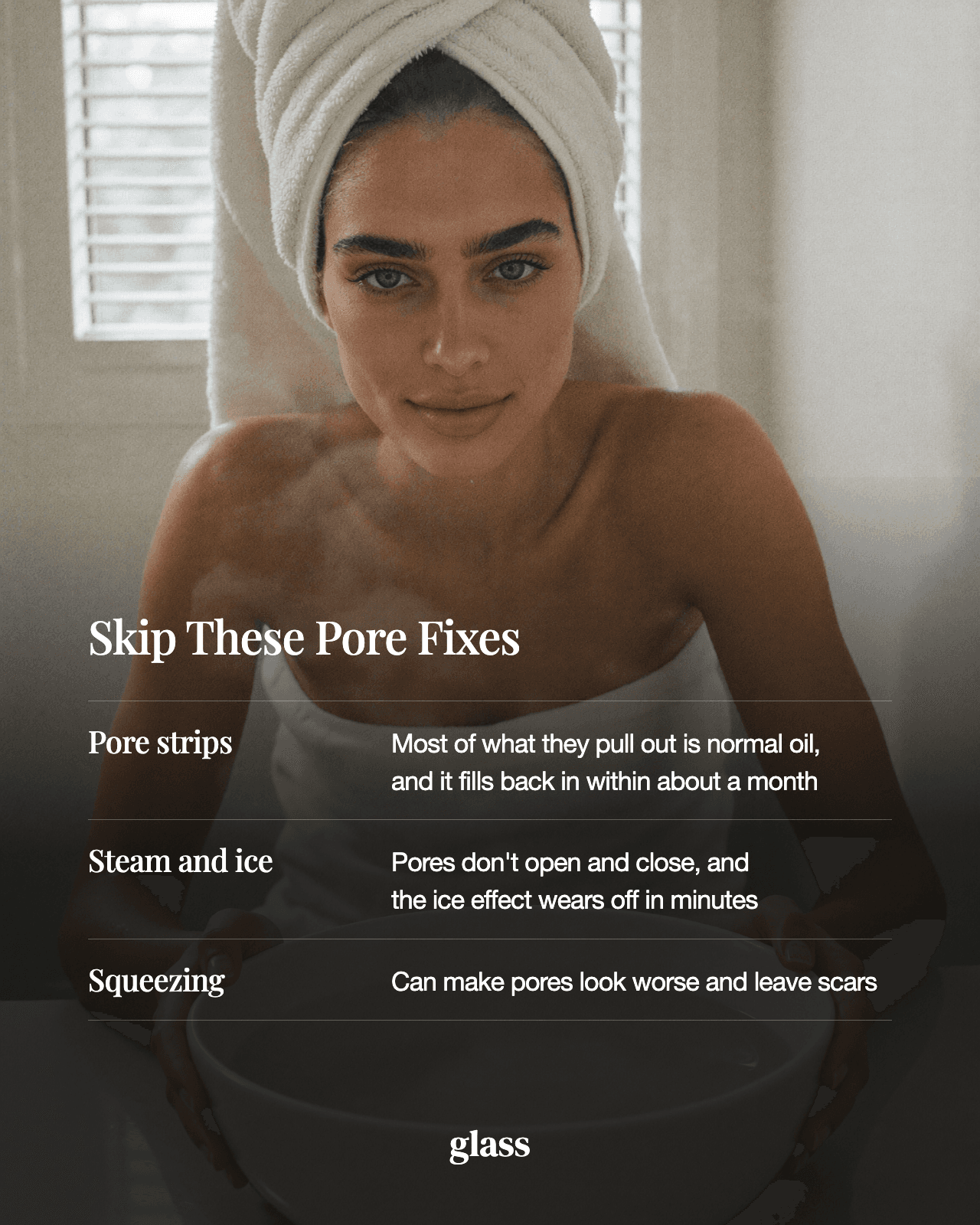
| Fix | What actually happens |
|---|---|
| Pore strips | They can pull out sebaceous filaments, the normal threads that carry oil to the surface. Cleveland Clinic says removing them can dry out your skin, and they are not a way to shrink pores. |
| Steam and ice | An ice cube or chilled roller tightens skin, but the effect lasts only a few minutes. Hot water goes the other way — the AAD says it can irritate skin and make pores look larger. |
| Squeezing | Cleveland Clinic warns that squeezing or using an extractor tool can cause scarring and harm the skin. The AAD adds that picking and digging irritate skin and make pores look more noticeable. |
Scrubbing belongs on the list too. It does not make skin any cleaner, and inflamed skin makes pores more prominent. Wash gently, with a non-comedogenic cleanser.
What to Start With at Home
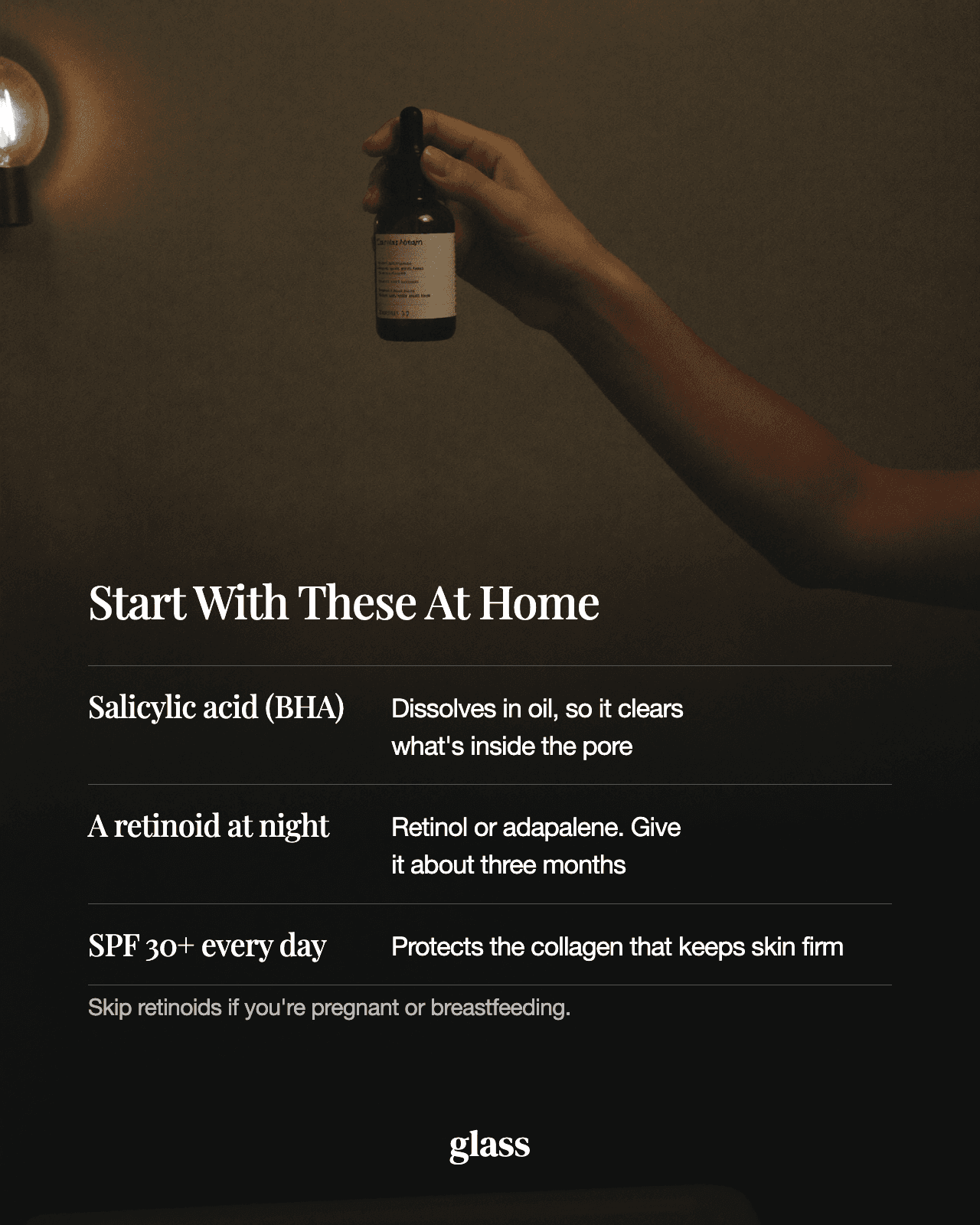
Three steps do most of the work. Each one targets a cause from the list above.
01. Salicylic acid (BHA)
Salicylic acid dissolves in oil, so it can clear what is inside the pore. The AAD says studies show salicylic acid can unclog pores, and that some salicylic acid cleansers are gentle enough for daily use. If it dries you out, alternate it with a mild cleanser. Cleveland Clinic lists BHAs among the hydroxy acids that unclog pores and boost collagen production.
02. A retinoid at night
Retinol and adapalene both help. Cleveland Clinic describes retinol as an ingredient that clears dead skin cells, unclogs pores and increases collagen production, and notes that Differin, a retinoid, is now available without a prescription. Use it at night, because it raises sun sensitivity.
Start slowly. A thin layer twice a week, building to daily use, keeps irritation down. Then be patient: retinoids work on skin structure, so give them a few months before you judge the result.
If you are pregnant or breastfeeding, skip retinol. The AAD is explicit on this.
03. SPF 30+ every day
Sunscreen is the step that protects the collagen holding pores in shape. The AAD recommends a broad-spectrum, water-resistant sunscreen of SPF 30 or higher, every day, even when it is raining or cold.
What to Book If You Want More

If your pores still bother you after a few months of the routine above, the in-office options are the next step. Start with the gentlest.
A chemical peel is the easiest entry point. Peels use alpha or beta hydroxy acids to clear dead skin and oil, the same job as your at-home BHA at a higher strength.
Clear + Brilliant is a gentle laser of this kind. Cleveland Clinic says dermatologists use lasers to resurface skin and reduce the look of large pores, and that you typically need a series of treatments, scheduled every four to eight weeks. The exact schedule depends on the device and your skin.
Microneedling punctures the skin with tiny sterile needles to trigger collagen production. The AAD lists large pores among the concerns dermatologists treat with it. Dermatologists use needles of 1.5 to 2 millimeters, while at-home devices are typically 0.5 millimeters or less, so at-home kits come up short. Expect a short series of sessions. RF versions such as Morpheus8 add radiofrequency energy and go deeper.
Expect your face to look and feel mildly sunburned for a short time afterward. Results vary from person to person, so a board-certified dermatologist should decide which option suits your skin type and tone. For how laser series are planned, see our guide to how many laser sessions you need.
The Glass Beauty Seoul Take
Pore products sell a promise nobody can keep. The honest version is less exciting and works better: you cannot change the size you were born with, but you can control the oil, the clogs, the sun and the collagen that decide how big pores look.
So build the base first. Salicylic acid, a retinoid at night and SPF every morning cost little and cover every cause you can influence. Give them a few months. If you still want more, a peel, a laser or microneedling is a real upgrade, not a rescue.
And take Cleveland Clinic's dermatologist's advice: put the magnifying mirror away. Nobody else is looking at your face that closely. If you want a plan built around your skin, our guide to skin treatments in your 30s shows how to match a treatment to what you actually see.
Glass Beauty Seoul is building the most honest guide to Korean skin care and treatment for readers outside Korea. Follow along as we break down what Seoul knows first.
Questions.
Can you actually shrink your pores?+
No. Pore size is mostly genetic, so you can't permanently shrink pores. You can make them look smaller by keeping them clear of oil and debris, protecting your skin from the sun and supporting collagen.
Do pore strips, steam or ice shrink pores?+
No. Pore strips can remove sebaceous filaments, which are normal. Ice tightens skin for only a few minutes, and hot water can irritate skin and make pores look larger.
What should you use at home for large-looking pores?+
Start with salicylic acid, a retinoid at night and a broad-spectrum SPF 30 or higher every day. Retinoids take time, so give them a few months. Skip retinol if you are pregnant or breastfeeding.
Is it safe to squeeze or extract pores?+
It is best not to. Squeezing and extractor tools can irritate skin, make pores look more noticeable and cause scarring.
Which in-office treatments help pores look smaller?+
Dermatologists use chemical peels, lasers such as Clear + Brilliant and microneedling, including radiofrequency versions. Results vary, so a board-certified dermatologist should match the option to your skin.