PDRN: Korea's Hottest Skin Rejuvenation Treatment in 2026
From Olive Young shelves to Gangnam clinics — what salmon DNA actually does for your skin, and why the injectable version is worth the flight.
PDRN searches on Olive Young surged 695% in a single year. The ingredient — derived from salmon DNA — now appears in serums, ampoules, and sheet masks across Korea. But here's what most of that hype misses: the version sitting on a shelf and the version injected in a Gangnam clinic are not the same thing.
One maintains your skin. The other transforms it.
If you've seen PDRN trending on TikTok or spotted Rejuran on a Korean skincare blog, you're looking at two different worlds packaged under the same name. This is the guide to understanding both — and knowing which one is worth your money.
What Is PDRN — and Why Is It Everywhere Right Now?
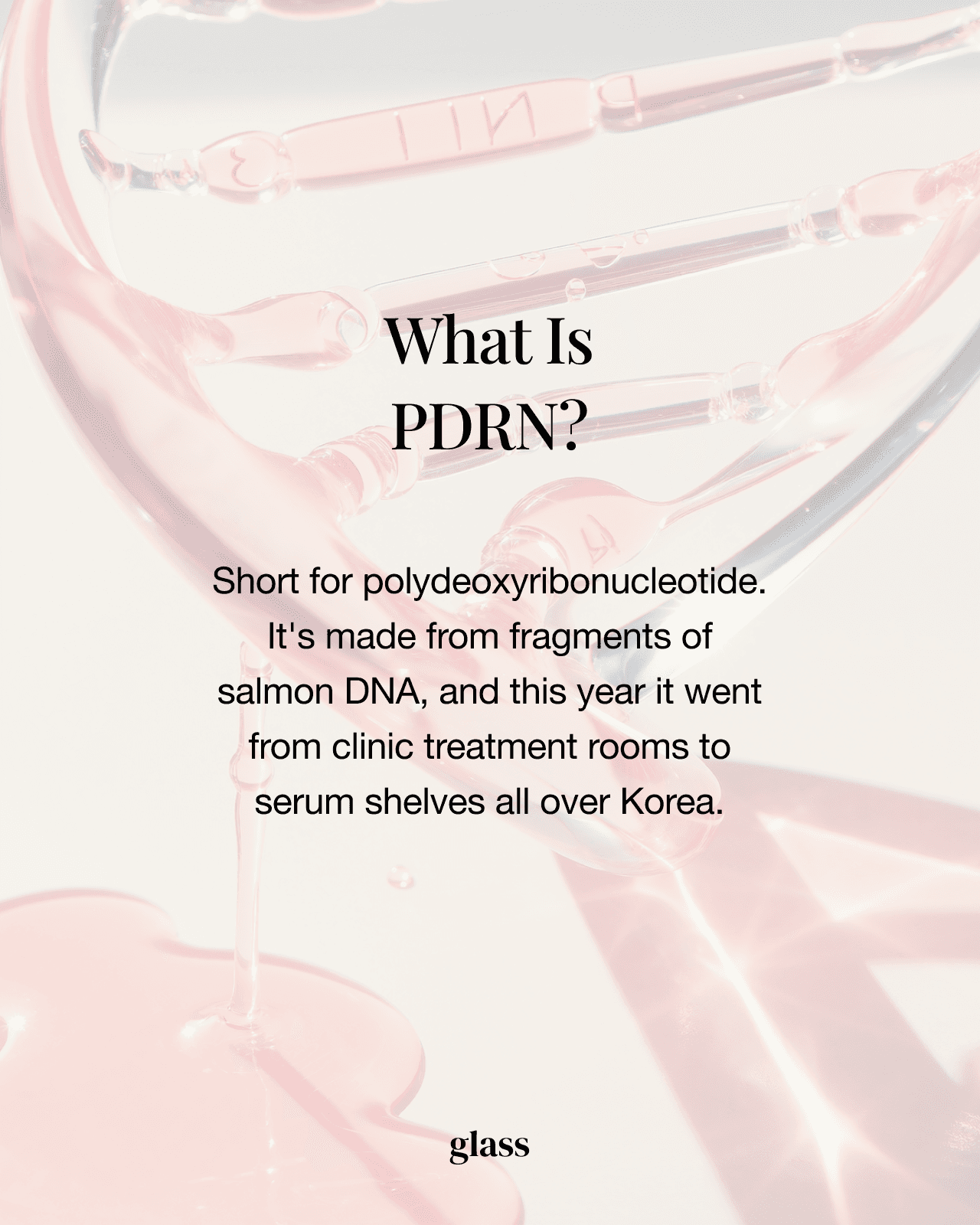
PDRN stands for polydeoxyribonucleotide. In plain terms, it's a set of short DNA fragments extracted from salmon. Salmon DNA shares over 95% structural similarity with human DNA, which makes it exceptionally biocompatible — your body recognizes it and puts it to work.
Korean dermatologists started using PDRN in clinical settings over a decade ago. It was a wound-healing treatment first, an anti-aging one second. But in 2025 and 2026, something shifted. K-beauty brands took the ingredient mainstream — and suddenly every serum on the Olive Young bestseller wall had "PDRN" on the label.
The numbers back it up. Clicks on PDRN products on Hwahae — Korea's largest beauty review platform — increased 5.7x in ten months. Medicube's PDRN Pink Peptide Serum and Anua's PDRN Capsule Serum became instant bestsellers. At ₩28,000–65,000 ($21–48), topical PDRN is affordable and accessible.
But accessibility created confusion. Consumers started equating a $30 serum with a clinical injection that costs ten times more — and produces fundamentally different results.
The Science Behind PDRN
PDRN works at the cellular level. When introduced into the skin — whether topically or via injection — it activates a receptor called A2A. This receptor triggers a chain reaction: fibroblasts wake up, collagen production increases, and microcirculation improves.
The result is skin that repairs itself faster, holds moisture better, and builds new tissue from the inside out. Clinical studies have shown PDRN's effectiveness in wound healing, reducing inflammation, and improving skin elasticity.
Here's the key distinction most people miss. Molecular weight matters. PDRN's shorter DNA chains penetrate more effectively for targeted repair — fine lines, scars, localized damage. Its cousin PN (polynucleotide) uses longer chains for broader, whole-face rejuvenation. Rejuran products use both, depending on the formulation.
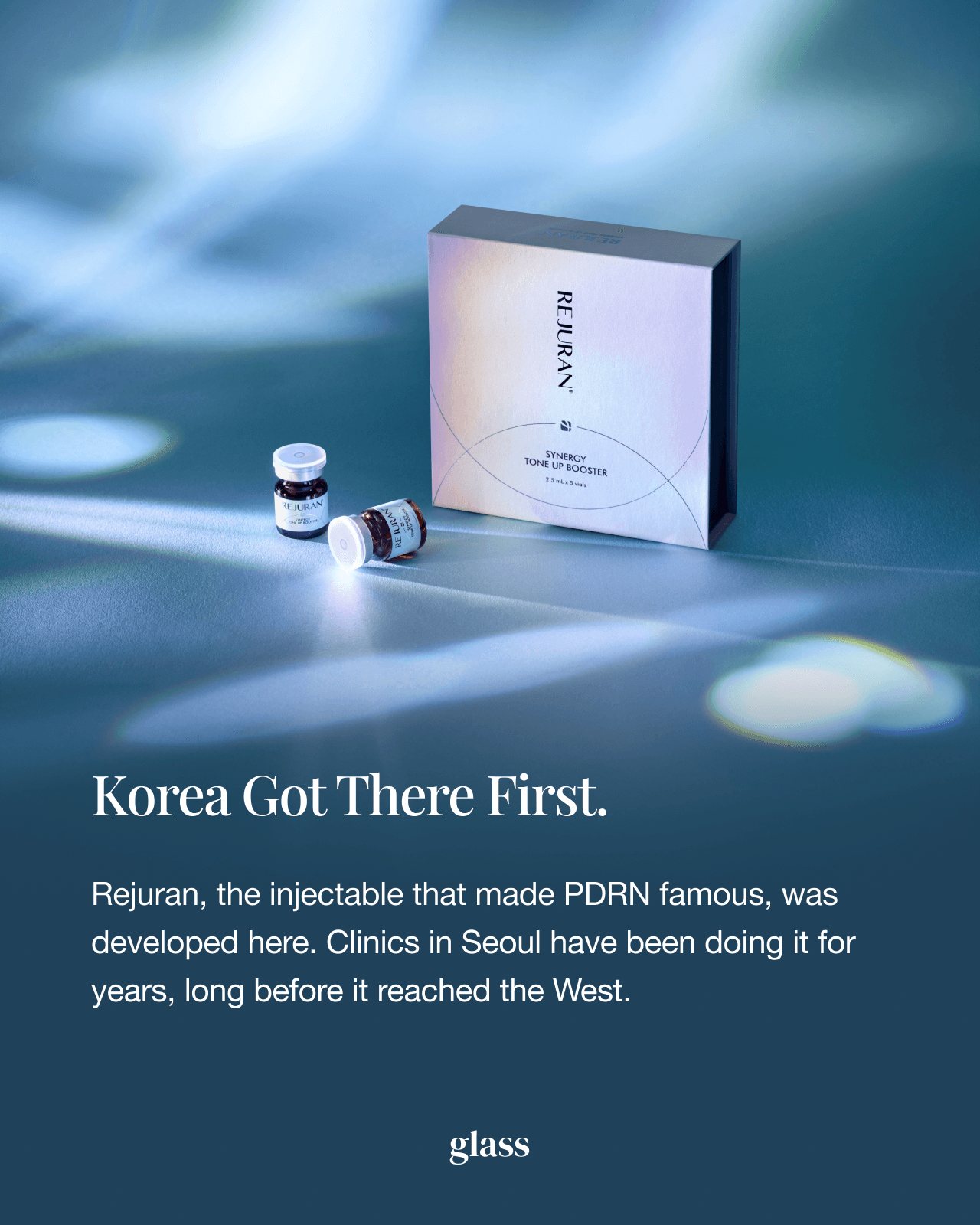
None of this is theoretical. Korean clinics have been refining PDRN protocols since the MFDS (Korea's FDA equivalent) approved Rejuran in 2014. That's over a decade of clinical data, technique development, and patient volume that no other country matches.
Topical PDRN vs Clinical PDRN — The Distinction That Changes Everything
This is the part most people get wrong.
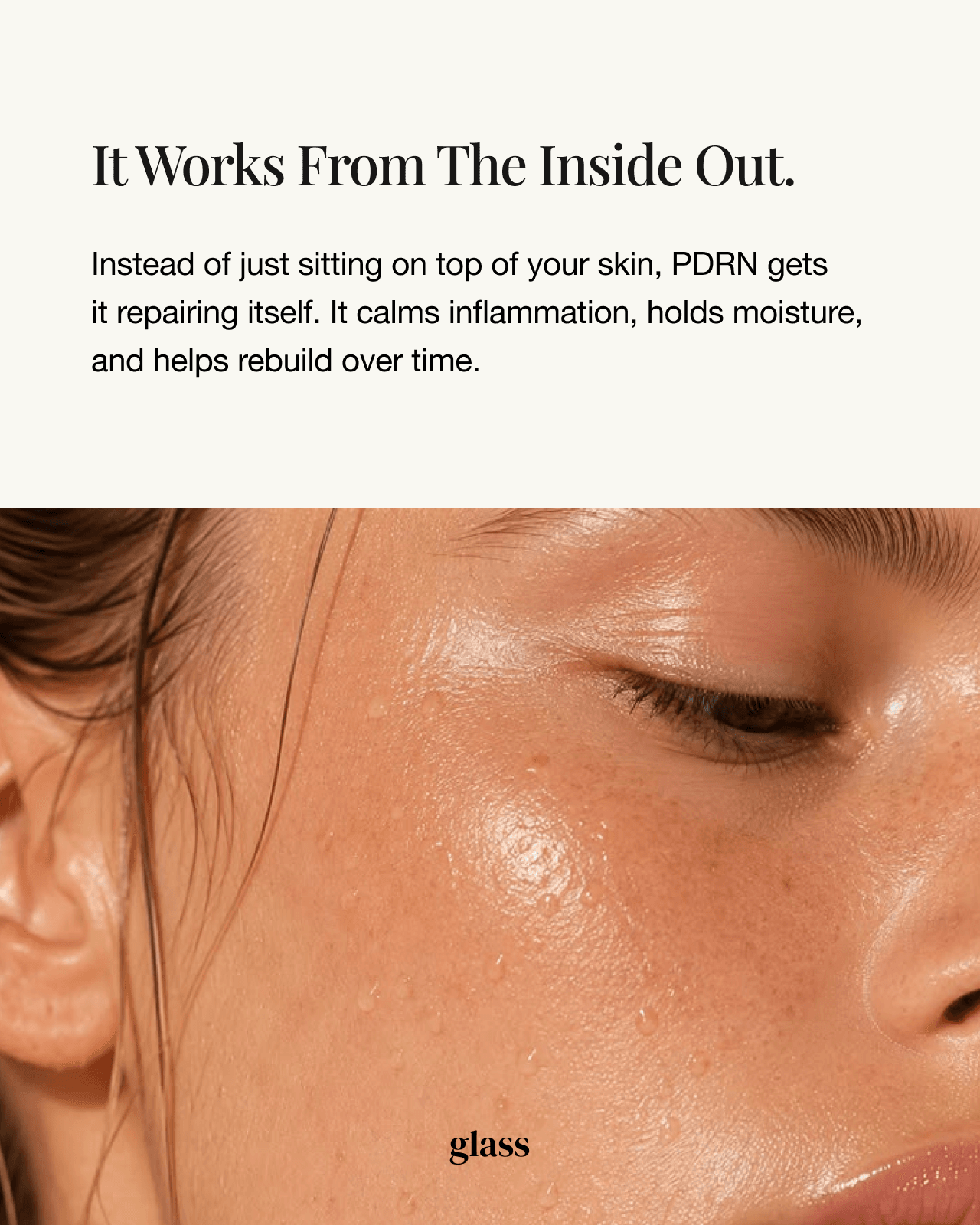
Topical PDRN — your serum, your ampoule, your cream — sits on the skin's surface. It offers hydration, mild texture improvement, and barrier support. It's maintenance. Think of it as daily vitamins for your skin.
Clinical PDRN — Rejuran injections — delivers concentrated polynucleotides directly into the dermis. It bypasses the skin barrier entirely. The result: accelerated collagen production, tissue regeneration, and visible structural improvement over multiple sessions.
A $30 serum and a $200 injection are not competing products. They're different categories. The serum keeps your skin healthy between treatments. The injection does the heavy lifting that no topical can replicate.
If you've been using PDRN serums and wondering why your results feel incremental — this is why. The topical version was never designed to deliver the same depth of change.
The Rejuran Family — Which One Do You Need?
Rejuran isn't a single product. It's a family of four, each engineered for a different concern. Korean clinics match the variant to your skin — not the other way around.
01 — Rejuran Healer
The original. A 2% polynucleotide formula in a 2cc vial — the largest volume, making it the most cost-effective option for full-face treatment. Rejuran Healer targets overall skin quality: fine lines, elasticity, texture, and tone. This is what most first-time patients get.
02 — Rejuran I
Designed specifically for the under-eye area. Thinner consistency, lower concentration, softer gel. The delicate skin around your eyes can't handle the thicker Healer formula — Rejuran I spreads smoothly without creating lumps in that sensitive zone.
03 — Rejuran S
Built for acne scars. Higher viscosity gel that physically supports depressed scar tissue while stimulating regeneration underneath. If acne scarring is your primary concern, this is the targeted solution.
04 — Rejuran HB
The hydration specialist. Combines polynucleotides with hyaluronic acid for intense moisture. Best for dehydrated, dull skin that needs both structural repair and immediate plumping.
| Variant | Target Area | Best For | Consistency |
|---|---|---|---|
| Healer | Full face | Overall rejuvenation, fine lines | Standard |
| I | Under-eye | Dark circles, crow's feet | Thin, soft |
| S | Scarred areas | Acne scars, pitting | High viscosity |
| HB | Full face | Dehydration, dullness | Medium + HA |
Your dermatologist in Seoul will recommend the right variant — or combine multiple types in a single session based on what your skin needs.
What PDRN Treatment in Korea Actually Costs
This is where the math gets interesting.
| Treatment | Korea (per session) | US (per session) |
|---|---|---|
| Rejuran Healer | $170–380 | $500–1,500 |
| Rejuran I | $150–310 | $400–1,200 |
| Rejuran S | $190–380 | $500–1,500 |
| 3-session package (Korea) | $295–553 | — |
Most patients need 3–4 sessions spaced 2–4 weeks apart for optimal results. In Korea, a full course of Rejuran Healer runs $295–553 for three sessions. In the US, a single session alone can cost $1,500.
But cost isn't the only factor. Rejuran is not FDA-approved for cosmetic injection in the United States. It holds MFDS approval in Korea (since 2014) and HSA approval in Singapore, but US providers offering PDRN injections operate off-label or with imported product. That means limited availability, inconsistent quality control, and higher prices.
In Korea, Rejuran is standard. Clinics in Gangnam perform dozens of sessions daily. The combination of regulatory approval, practitioner experience, and competitive pricing makes Seoul the logical destination for anyone serious about PDRN treatment.
Many patients combine Rejuran with other procedures — laser, microneedling, or other Korean skin treatments — in a single trip. A multi-treatment visit that would cost thousands in the US runs a few hundred dollars in Seoul.

What to Expect During Treatment
A Rejuran session in Korea takes 30–45 minutes from consultation to completion. Here's the process:
- Consultation — Your dermatologist examines your skin, discusses your goals, and recommends the right Rejuran variant
- Numbing — Topical anesthetic cream applied for 15–20 minutes
- Injection — Multiple micro-injections across the treatment area using a fine needle or automated injector
- Aftercare — Cooling mask or LED therapy to reduce redness
Downtime is minimal. Expect small raised bumps at injection sites that flatten within 24–48 hours. Mild redness and swelling resolve in 1–3 days. Most patients return to normal activities the same day.
Results build gradually. You'll notice smoother texture and improved hydration within 1–2 weeks after your first session. The full effect — firmer, more elastic, visibly healthier skin — develops over 2–3 months as collagen production ramps up. Results typically last 6–12 months, depending on your skin condition and lifestyle.
Individual results vary. Your dermatologist will adjust the treatment plan based on how your skin responds after the first session.
FAQ
Is PDRN safe?
Yes. PDRN has been used clinically in Korea since 2014 with an established safety profile. Salmon DNA's high biocompatibility means adverse reactions are rare. The most common side effects — temporary redness, swelling, and small bumps — resolve within days.
How many Rejuran sessions do I need?
Most clinics recommend 3–4 sessions spaced 2–4 weeks apart for initial treatment, followed by maintenance sessions every 6–12 months. Your dermatologist will adjust based on your skin condition and goals.
Can I combine PDRN with other treatments?
Absolutely. Korean clinics routinely pair Rejuran with laser treatments, microneedling, Botox, or filler in the same visit. In fact, combining treatments is one of the biggest advantages of getting procedures done in Seoul — clinics design multi-treatment protocols that compound results.
What's the difference between PDRN and exosomes?
Both are regenerative treatments, but they work differently. PDRN uses DNA fragments to activate cellular repair through the A2A receptor pathway. Exosomes are cell-derived vesicles that carry growth factors and signaling molecules to stimulate tissue regeneration. Some Korean clinics combine both for enhanced results.
How long do Rejuran results last?
Expect 6–12 months of visible improvement from a full course. Collagen production continues for weeks after treatment, so results actually improve over time before gradually fading. Maintenance sessions 1–2 times per year keep results consistent.
The Glass Beauty Seoul Take
PDRN is having its moment — and for good reason. The science is real, the clinical track record in Korea is long, and the topical boom means more people are discovering the ingredient every week.
But the topical boom is also creating a gap between expectation and reality. A $30 serum is a great addition to your routine. It is not a substitute for what a Rejuran injection delivers. The sooner consumers understand that distinction, the better their decisions get.
Korea is the only place where PDRN treatment makes complete sense right now. The regulatory approval is there. The clinical expertise spans over a decade. The pricing is a fraction of what you'd pay in the US — if you could even find a provider. And the sheer volume of procedures Korean dermatologists perform means your practitioner has seen hundreds of cases like yours.
If you've been watching PDRN trend on your feed and wondering whether it lives up to the hype — it does. But only if you're looking at the right version.
We're building the definitive guide to Korean skin treatments for Americans who want real results. Follow along as we break down every procedure, clinic, and decision you need to make — so when you land in Seoul, you already know exactly what to ask for.
Frequently Asked Questions
Is PDRN safe?+
Yes. PDRN has been used clinically in Korea since 2014 with an established safety profile. Salmon DNA's high biocompatibility means adverse reactions are rare. The most common side effects — temporary redness, swelling, and small bumps — resolve within days.
How many Rejuran sessions do I need?+
Most clinics recommend 3–4 sessions spaced 2–4 weeks apart for initial treatment, followed by maintenance sessions every 6–12 months.
Can I combine PDRN with other treatments?+
Yes. Korean clinics routinely pair Rejuran with laser treatments, microneedling, Botox, or filler in the same visit for compounded results.
What's the difference between PDRN and exosomes?+
Both are regenerative, but PDRN uses DNA fragments to activate cellular repair through the A2A receptor. Exosomes carry growth factors and signaling molecules for tissue regeneration. Some clinics combine both.
How long do Rejuran results last?+
Expect 6–12 months of visible improvement from a full course. Maintenance sessions 1–2 times per year keep results consistent.
Get the Seoul Glow
K-beauty insights, treatment guides, and trend alerts — delivered weekly.