XERF Treatment, Explained: Kim Kardashian's Korean Fave
It isn't a laser, it doesn't need numbing, and Seoul has been doing it for years. Here's what XERF is, how it compares to Thermage and Ultherapy, and what it costs in LA versus Gangnam.
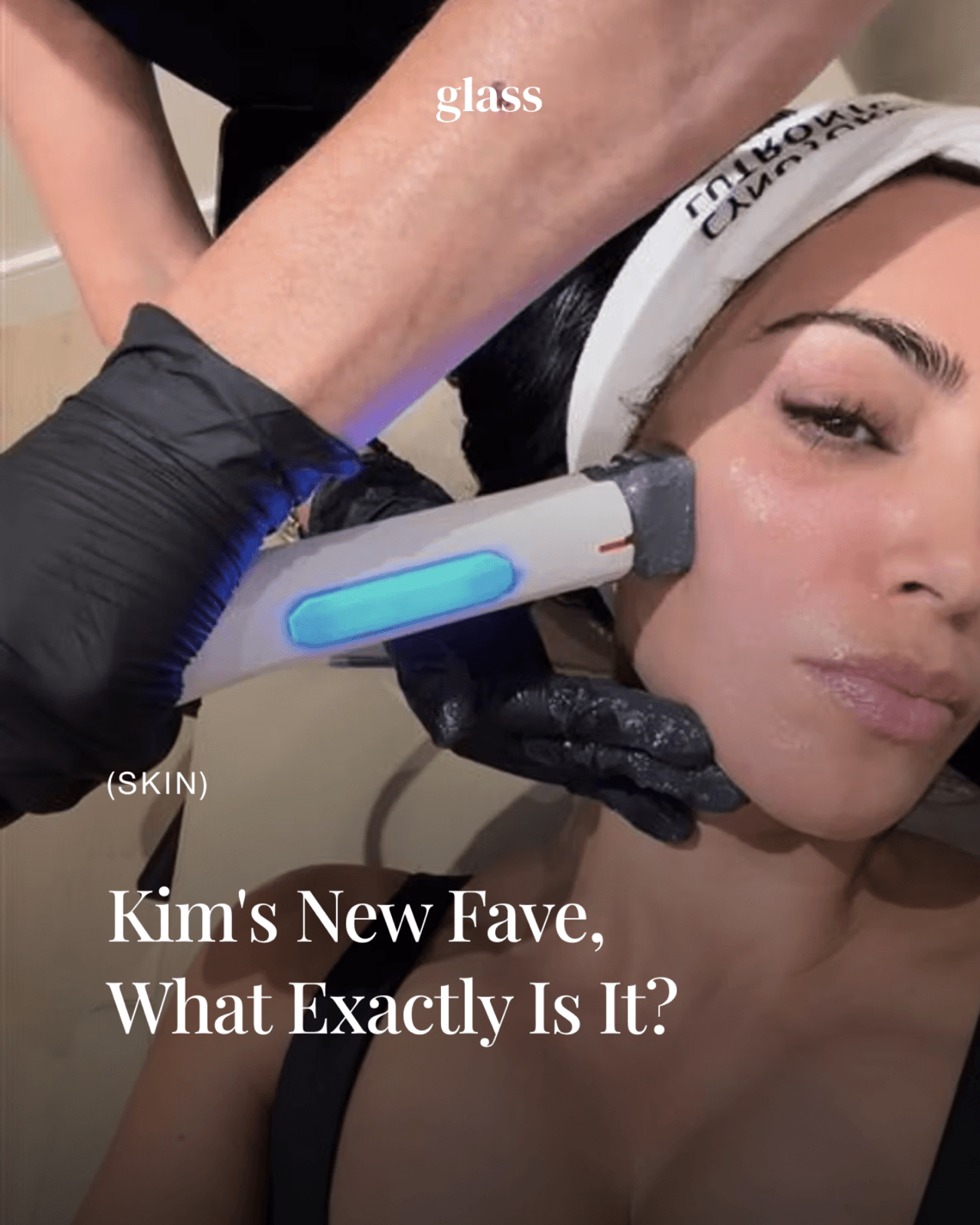
On February 26, Kim Kardashian posted a story of a gloved hand gliding a glowing handpiece across her cheek and captioned it her "new fave tightening laser." It doesn't even hurt, she added. Priyanka Chopra posted her own session soon after, and clinics from Los Angeles to New York started fielding the same question: what is that?
Here's the first thing to know: it isn't a laser. XERF is a radiofrequency skin-tightening treatment — and it was built in Korea, where clinics have been running it for years before a single American medspa could offer it.
This is what it is, how it compares to the treatments you already know, and what it costs in Los Angeles versus Seoul.
What XERF Actually Is
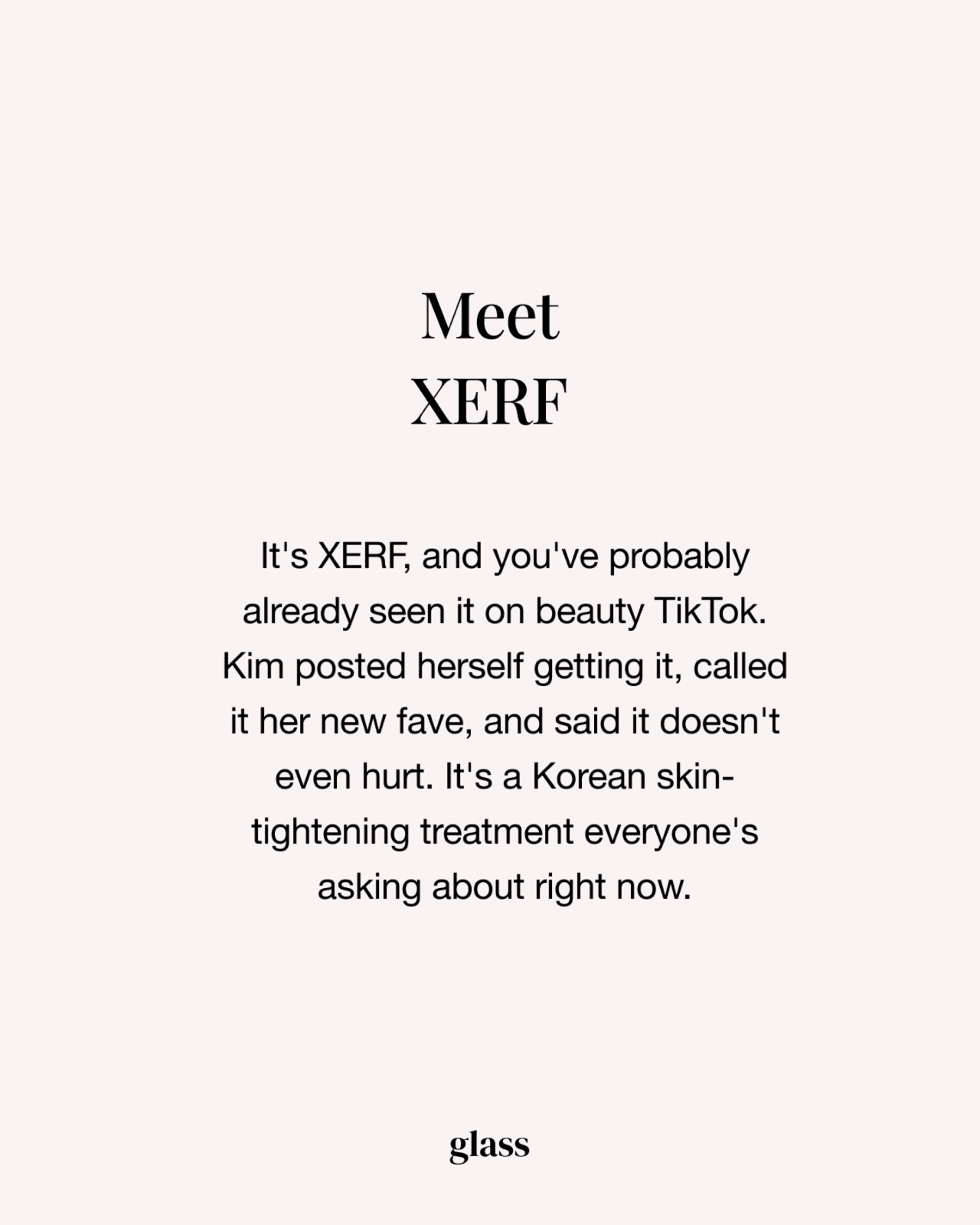
XERF is a monopolar radiofrequency device from Cynosure-Lutronic, a Korean manufacturer, developed over roughly six years and used across Seoul clinics before the FDA cleared it in August 2025. Radiofrequency is not new — Thermage has been heating dermis to trigger collagen since the early 2000s. What's new is how XERF delivers it.
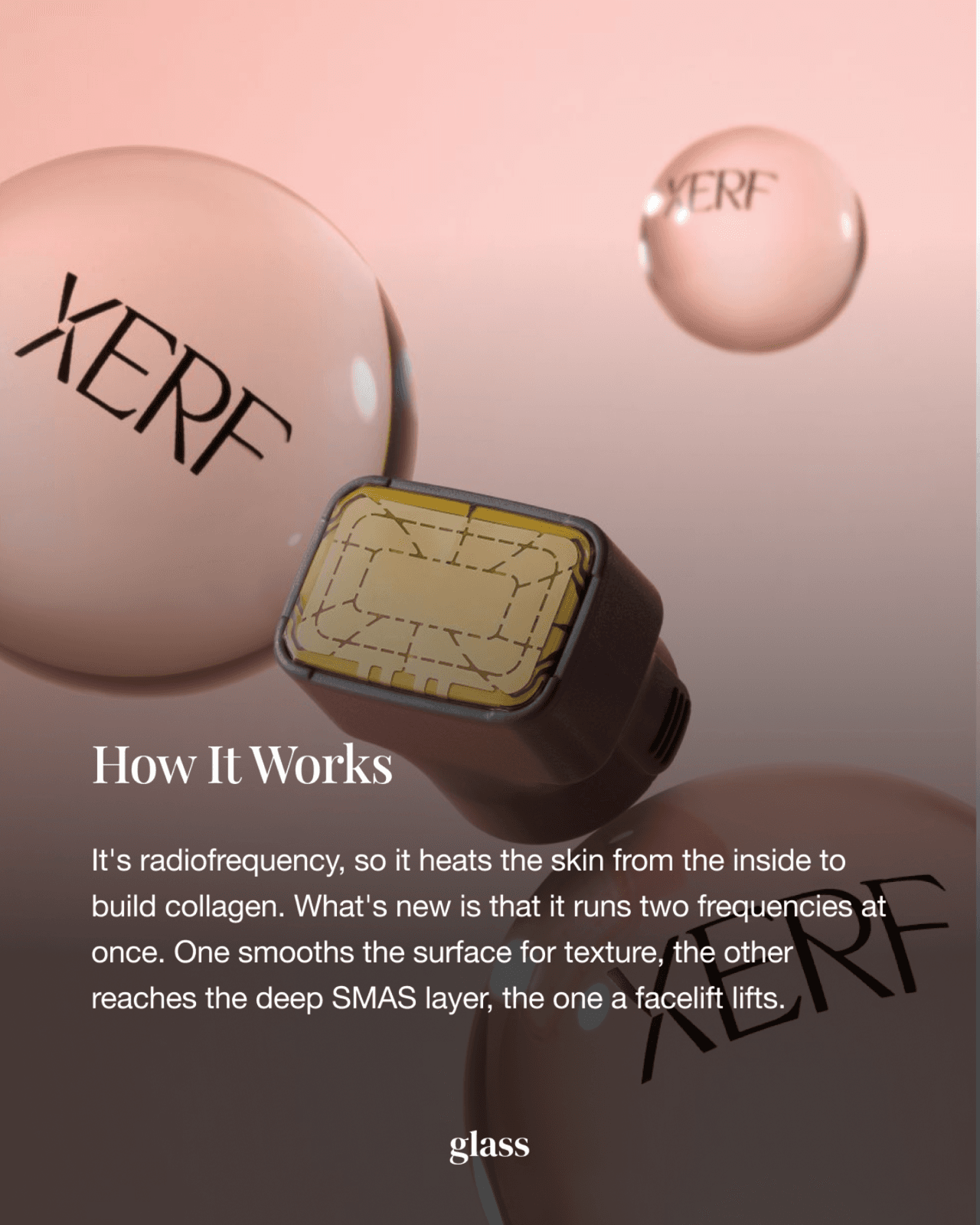
The device runs two frequencies at the same time. A 6.78 MHz current works the upper dermis — the layer responsible for texture, fine lines, and that crepey look. A 2 MHz current travels deeper, down to the SMAS — the superficial musculoaponeurotic system, the sheet of connective tissue a surgeon pulls tight during a facelift. Practitioners choose from three depth settings, so energy can sit near the surface for lines or drive toward fascia for firmness.
The mechanism is the same one behind every energy-based tightening treatment: controlled heat causes existing collagen fibers to contract immediately, then signals the skin to build new collagen over the following weeks. The difference is that XERF reaches both the surface and the structural layer in one pass, instead of asking you to pick one.
Why It's Her Fave — No Needles, No Numbing, No Hollowing
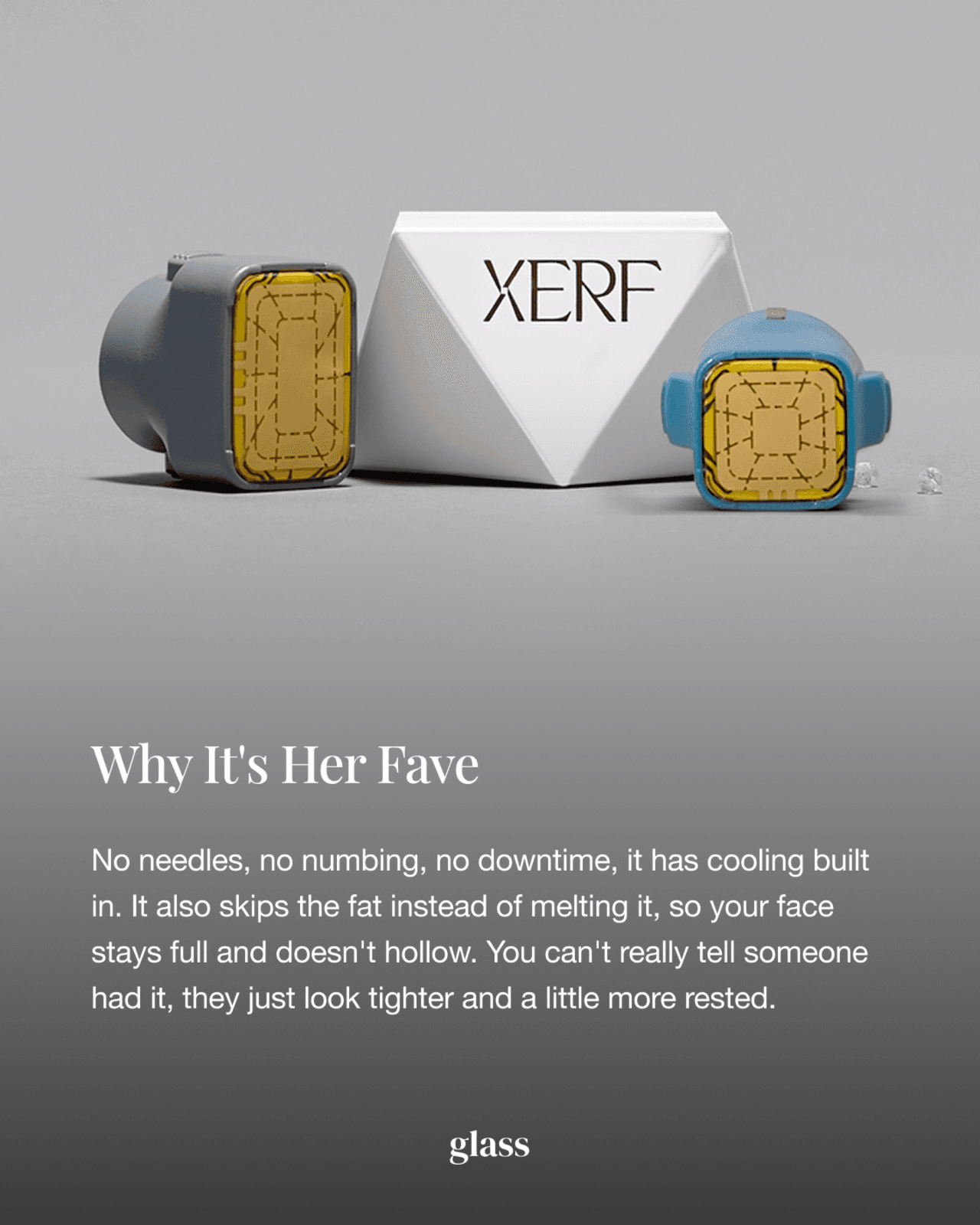
Three things explain why a treatment this deep can be done on a lunch break.
Cooling is built into the handpiece. XERF fires up to 12 bursts of contact cooling per pulse, chilling the surface while heat lands underneath. That's why it runs without numbing cream. Two board-certified dermatologists who had it done on themselves put the pain at 1 out of 10 on the most aggressive setting (Dr. David Kim, New York) and 2 to 3 out of 10 (Dr. Nina Desai, Los Angeles). One beauty editor who had it done in Seoul compared it to a hot stone massage with a chill on top. Expect a few warm spots near the jaw and cheekbone, and pink skin for about 30 minutes. That's the downtime.
It skips the fat. The energy is tuned to engage the fibrous network that holds the face up — the fibro-septal bands — while intentionally avoiding fat. This matters more than it sounds. Aggressive tightening treatments earned a reputation for hollowing cheeks and temples, because heat that melts fat also removes volume. XERF firms the scaffolding and leaves the padding alone, so the face stays full.
The result is quiet. Nobody can tell you had something done. The jawline reads a little sharper, the skin a little firmer, and you look like you slept. For a 45-year-old with early laxity who wants to look like herself, that's exactly the point.
XERF vs Thermage vs Ultherapy
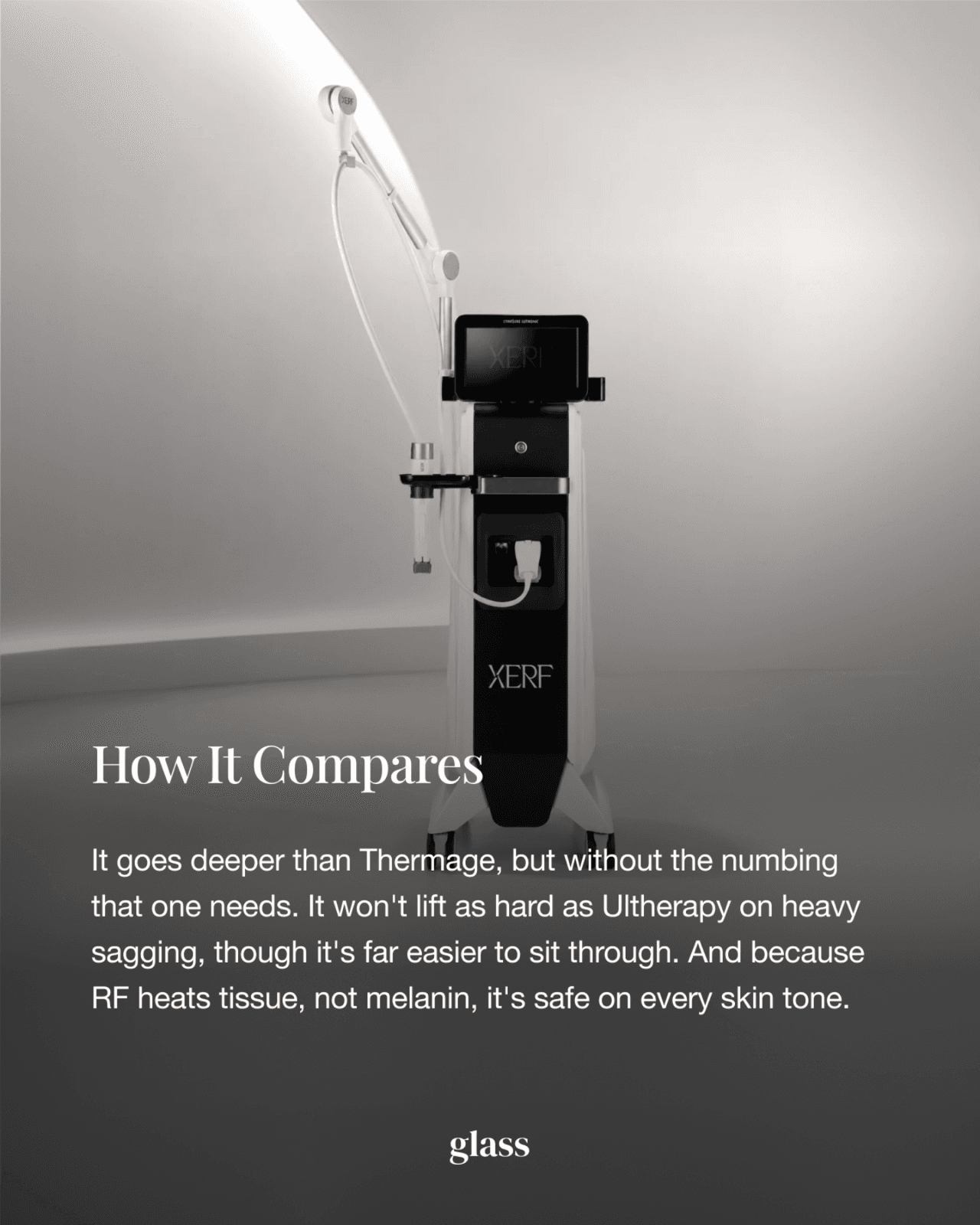
If you've read our breakdown of Ultherapy vs Thermage in Korea, you know the two sit at opposite ends: Ultherapy lifts hard and hurts, Thermage firms gently and hurts less. XERF lands in between — and in a few ways, ahead of both.
| XERF | Thermage FLX | Ultherapy | |
|---|---|---|---|
| Energy | Dual-frequency monopolar RF (6.78 + 2 MHz) | Single-frequency monopolar RF (6.78 MHz) | Micro-focused ultrasound |
| Depth reached | Dermis through SMAS, 3 settings | Dermis | SMAS (3.0–4.5 mm) |
| Lift strength | Moderate | Mild firming | Strongest |
| Numbing needed | No | Usually | Often, plus oral pain relief |
| Pain (typical) | 1–3 / 10 | Moderate | Highest of the three |
| Downtime | Pink for ~30 min | Minimal | Mild swelling for days |
| Safe on darker skin | Yes — RF heats tissue, not melanin | Yes | Yes |
| Results seen | Immediate, peak at 3–6 months | Gradual over 2–6 months | Gradual over 3–6 months |
Three takeaways from that table.
XERF goes deeper than Thermage without the numbing Thermage needs, because the second frequency reaches a layer Thermage's single frequency doesn't. Ultherapy still wins on heavy sagging — if the jowls have dropped and you want a visible lift, ultrasound at 4.5 mm does more than RF. But most people asking about XERF don't have heavy sagging. They have early laxity, and for that, sitting through Ultherapy is a lot of pain for a difference they won't see.
And because radiofrequency heats water in tissue rather than pigment, XERF carries no added risk for darker skin tones — a limitation that still rules out several laser treatments for a large share of American patients.
What It Costs — Seoul vs the US
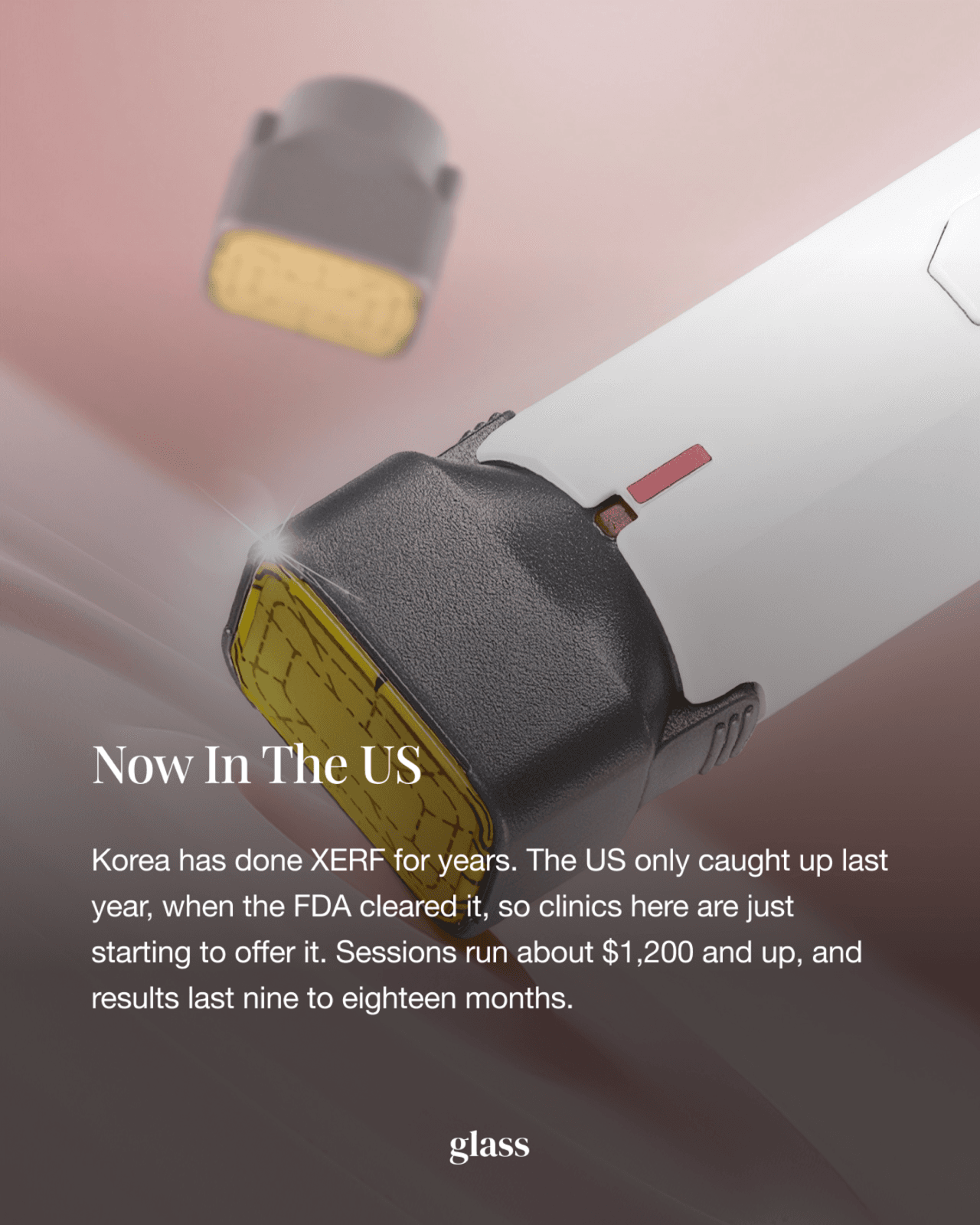
The FDA cleared XERF in August 2025, so American clinics started offering it around the turn of the year. Early adopters are concentrated in Los Angeles and New York, and pricing reflects that.
US sessions run from about $1,200 and up, with most established practices charging $1,500 to $3,000 for a full face. Dr. Desai's Los Angeles office, one of the first in the country, charges $2,500 per session and recommends two sessions for the best result.
Seoul prices the treatment differently. Korean clinics sell XERF by the shot — one shot is one pulse from the handpiece — and you buy the number of shots your face needs.
| Package | Covers | Seoul price (KRW) | Seoul price (USD) |
|---|---|---|---|
| 300 shots | Jawline, chin, lower face | 800,000–1,300,000 | $600–950 |
| 600 shots | Full face — the standard package | 1,600,000–2,500,000 | $1,200–1,850 |
| 900 shots | Full face + jawline + upper neck | 2,300,000–3,000,000 | $1,700–2,200 |
| 1,200 shots | Face and neck, comprehensive | 3,000,000–4,000,000 | $2,200–2,950 |
A standard 600-shot full-face session in Gangnam lands at roughly half the US price, and it's performed by practitioners who have been using this exact device for years, not months. Korean clinics also price XERF about 20–30% below Thermage FLX, so it's the cheaper of the two RF options on both sides of the Pacific.
Either way, results last 9 to 18 months. Most people book once a year and skip the touch-ups.
What a Session Looks Like, and Who It's For
A full-face XERF session takes about an hour. Here's the shape of it.
| When | What happens |
|---|---|
| Consultation | Practitioner maps the face, picks depth settings, sets the shot count |
| Treatment (~60 min) | Handpiece moves across the face in overlapping passes. Warm, occasionally hot near the jaw. No numbing cream |
| Right after | Skin looks pink, feels warm. Fades in about 30 minutes. Makeup goes on, you go back to work |
| Same day | An immediate tightening from collagen contraction — subtle, but visible |
| 4–6 weeks | New collagen production picks up. Firmness builds |
| 3–6 months | Peak result |
| 9–18 months | Result holds, then gradually softens. Time to rebook |
Who it's for: Mid-30s to 40s, early to moderate laxity, a jawline that's starting to blur, someone who wants to look rested rather than done. Dr. Desai's line is that in her practice she hasn't met the wrong client for it yet.
Who should look elsewhere: Heavy sagging and true jowls call for Ultherapy or a surgical consult — RF firms, it doesn't hoist. And if you've had fillers recently, tell your practitioner; heat and filler need to be sequenced.
One honest caveat. XERF has years of use in Korea, but its US clinical record is young — some American dermatologists are waiting for more data before recommending it broadly. Results vary by skin, age, and operator, and no tightening treatment replaces a facelift.
The Glass Beauty Seoul Take
Kim Kardashian didn't fly to Seoul for XERF. She had it at a medspa in the Los Angeles area, on a device that had just cleared the FDA. That's the real story here — not that a celebrity found a new toy, but that a Korean device went mainstream in America the moment it was allowed to.
Korea's aesthetic clinics run on volume, and that volume is where devices like XERF get refined before they travel. By the time an American patient hears about a treatment on Instagram, Seoul has usually been doing it long enough to know exactly which settings work, which faces it suits, and how to price it fairly.
If you can get XERF in your city, you no longer need a passport for it. But if a trip to Korea was already on the list, the math changes: the same device, half the price, and practitioners with years of hands-on time. Read how to pick a skin clinic in Seoul before you book — and if you're staying stateside, our guide to Korean medspas in the US covers the clinics run by people who trained on this equipment first.
The question isn't whether XERF works. It's whether you want to pay LA prices to find out.
Glass Beauty Seoul is building the definitive guide to Korean skin treatments for American readers — what they are, what they cost, and where to get them done right. Follow along as we break down every treatment worth knowing.
Frequently Asked Questions
Is XERF a laser?+
No. Kim Kardashian called it a "tightening laser," but XERF is a monopolar radiofrequency device. It heats water in the tissue rather than targeting pigment, which is why it works without numbing and is safe on every skin tone.
Does XERF hurt?+
Barely. The handpiece fires up to 12 cooling bursts per pulse, so most people rate it 1–3 out of 10 with a few warm spots near the jaw and cheekbones. No numbing cream is needed, and skin stays pink for about 30 minutes.
How long do XERF results last?+
Nine to eighteen months. There's an immediate tightening on the day, new collagen builds over 4–6 weeks, results peak at 3–6 months, and most people rebook once a year.
How much does XERF cost in Korea vs the US?+
In the US, sessions run from about $1,200 and typically $1,500–3,000 for a full face. Seoul clinics price by the shot: 300 shots for the jawline is about $600–950, and the standard 600-shot full face is about $1,200–1,850 — roughly half the US price.
Is XERF better than Thermage or Ultherapy?+
It depends on how much laxity you have. XERF reaches deeper than Thermage without numbing and is far more comfortable than Ultherapy, making it the pick for early to moderate laxity. Heavy sagging still gets more lift from Ultherapy.
Get the Seoul Glow
K-beauty insights, treatment guides, and trend alerts — delivered weekly.