Skincare in Your 30s: 3 Habits Worth Starting Now
Collagen slows and years of sun start to show. A gentle retinol, an eye cream of its own and a routine that reaches your neck do most of the work.

Nothing dramatic happens to your skin on your 30th birthday. What happens is quieter — a fine line that stays after you stop smiling, a little less glow by mid-afternoon, a sun spot that used to fade by October and now does not. Skincare in your 30s is less about fixing anything and more about starting the right habits before those changes add up.
The good news: you do not need a twelve-step overhaul. Three habits do most of the work — a gentle retinol, an eye cream of its own, and a routine that keeps going past your jawline. Here is why each one matters now, and how to start without irritating your skin.
Why Your Skin Changes in Your 30s
Two things are happening at once. The first is collagen, the protein that keeps skin firm and smooth. Cleveland Clinic puts it simply: your body produces less collagen as you age, and the collagen you have breaks down faster. That slowdown begins long before you notice it — by your 30s, it starts to show as fine lines and skin that looks a little duller than it used to.
The second is the sun. The same Cleveland Clinic page notes that UV light damages collagen and too much sunlight makes it break down more quickly. Every unprotected afternoon from your teens and 20s counts toward the skin you have now. The Skin Cancer Foundation reports that people who use SPF 15 or higher daily show 24 percent less skin aging than people who do not.
So the habits worth starting in your 30s do two jobs: support the skin while collagen slows, and stop the sun from making it worse.
01. Start Retinol Slowly
If one ingredient earns a place in a 30s routine, it is retinol. A form of vitamin A, it speeds up skin cell turnover and supports collagen. Cleveland Clinic says retinol can reduce the appearance of fine lines and wrinkles by boosting collagen, and some people find it lightens dark spots over time. The American Academy of Dermatology adds that it is routinely used to improve uneven skin tone, pigmentation and texture.
The mistake most people make is starting too strong, too often. Dermatologist Dr. Tina Alster tells the AAD to choose the least-intense formula you can find and use it every other night to start, building up slowly. In practice, that means two or three nights a week for the first few weeks.
What to expect in the first weeks
Some dryness, redness or light peeling at the start is normal. Cleveland Clinic lists dry, irritated and flaky skin as common early effects that usually fade as your skin adjusts. A moisturizer right after retinol helps — the AAD's dermatologists note that starting slowly and using moisturizer reduces irritation, which matters even more for deeper skin tones, where irritation can leave dark marks.
Patience is part of the routine. Expect several weeks before skin feels better and several months before fine lines change.
Three retinol rules
- Use it at night. Retinol makes skin more sensitive to the sun, so it belongs in your evening routine, with sunscreen every morning.
- Moisturize after. It keeps the dryness manageable while your skin adjusts.
- Skip it if you are pregnant or trying to conceive. The AAD is clear that retinoids should not be used during pregnancy, and Cleveland Clinic advises telling your doctor if you plan to become pregnant.
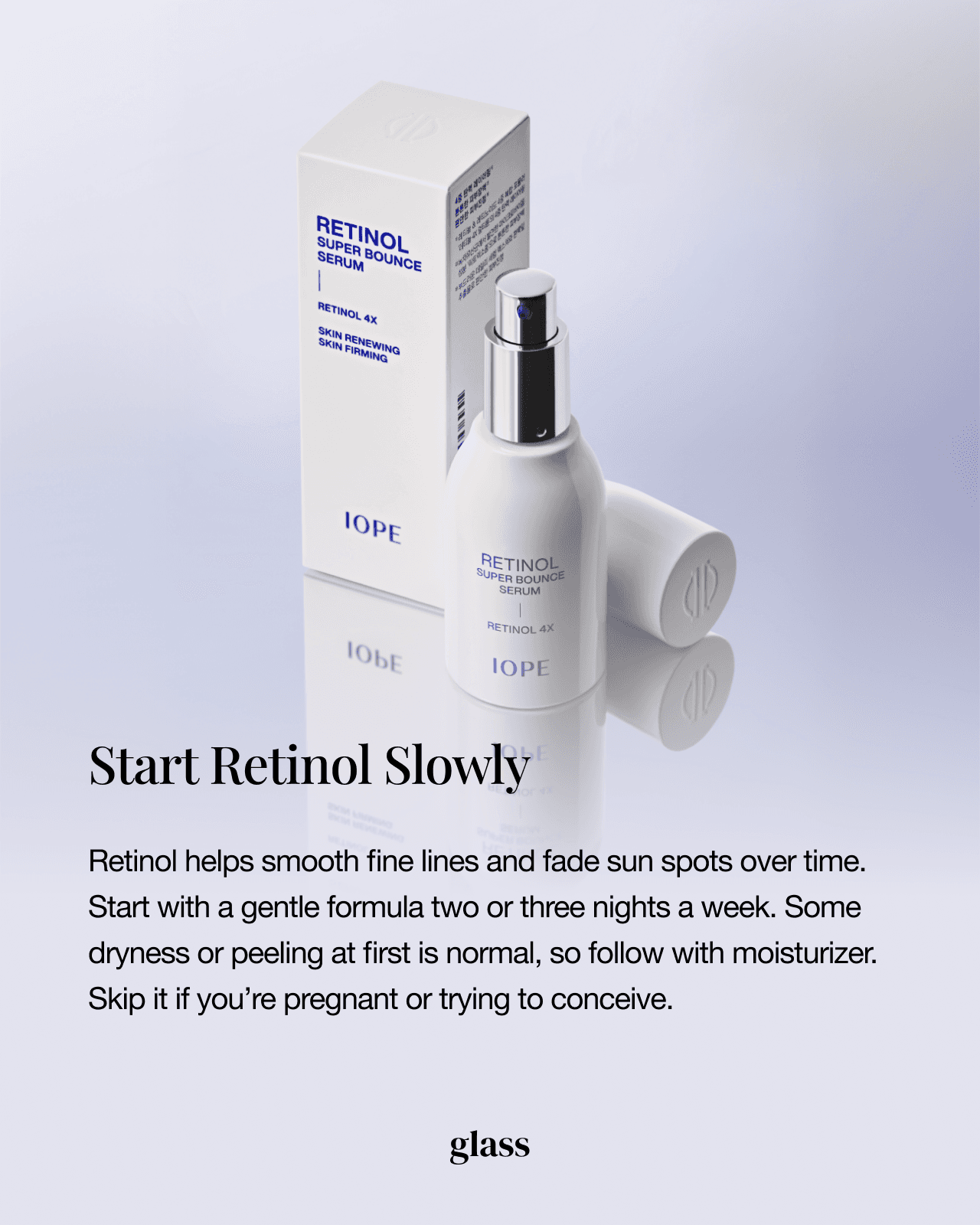
Plenty of Korean brands make gentle, everyday retinol serums — the IOPE Retinol Super Bounce Serum on our slide is one example. Whatever you choose, the rule is the same: low and slow beats strong and sporadic. If you want to see where retinol fits in a full evening routine, our Korean night skincare routine walks through every step.
02. Give Your Eye Area Its Own Cream
The skin around your eyes is different from the rest of your face. Cleveland Clinic dermatologist Dr. Shilpi Khetarpal explains that it is the thinnest on your body, which is why it dries out and gets irritated so easily. Thin, dry skin shows fine lines first — often the first lines anyone in their 30s notices.
That is the case for a dedicated eye cream. A plain moisturizer hydrates. An eye cream built around the right active ingredients targets what this skin needs:
| Ingredient | What it does around the eyes | Source |
|---|---|---|
| Retinol | Stimulates collagen to reduce and prevent lines and wrinkles | Cleveland Clinic |
| Peptides | Increase collagen and elastin to firm crepey, drooping skin | Cleveland Clinic |
| Hyaluronic acid | Hydrates thirsty skin, so fine lines look softer | Cleveland Clinic |
How to apply it
Use less than you think. Henry Ford Health dermatologist Dr. Alison Tisack Boucher recommends your ring finger, because it is the weakest finger, and dabbing around the eye instead of rubbing. Pat a tiny amount along the orbital bone, morning and night, and never tug the skin.
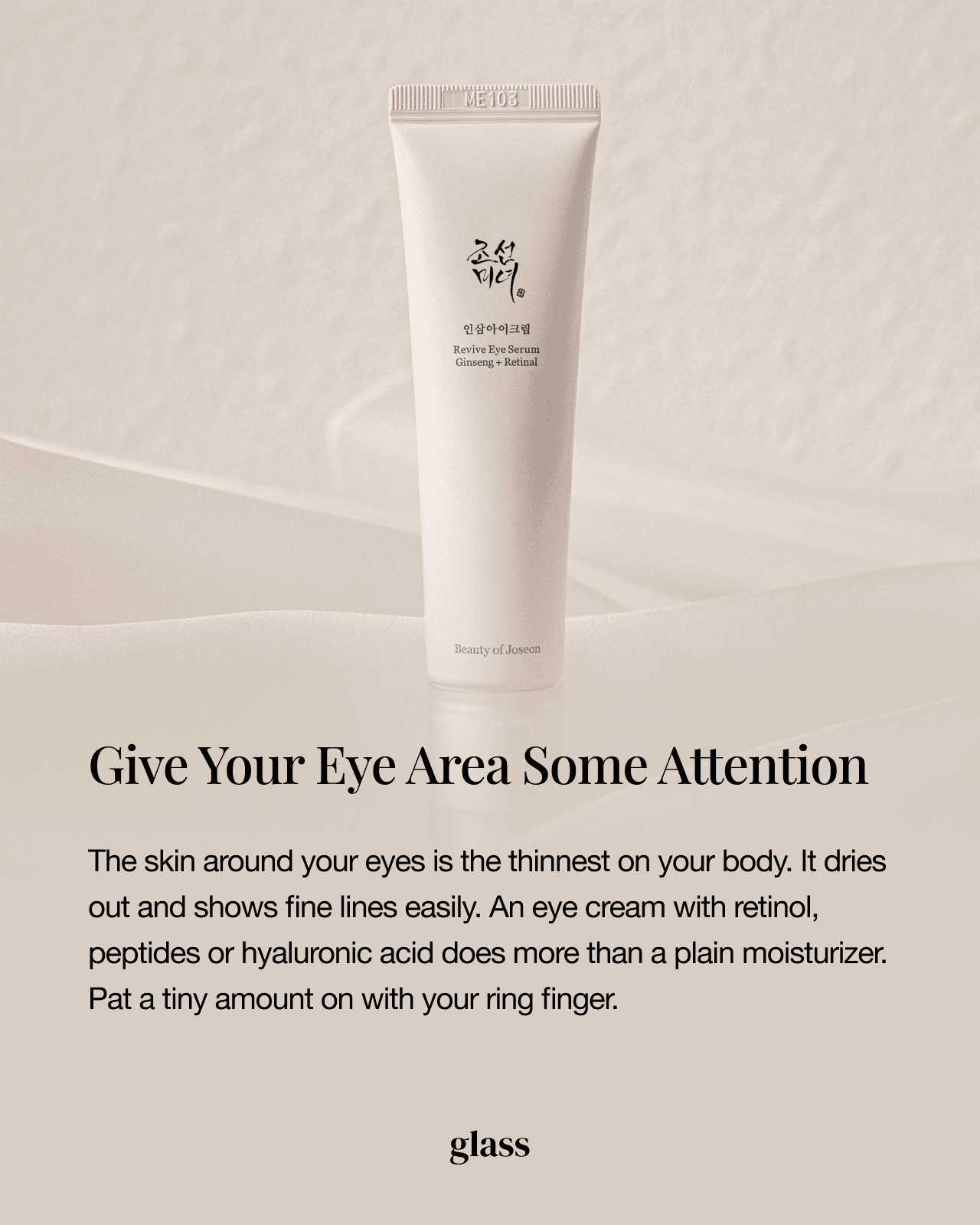
The Beauty of Joseon Revive Eye Serum on our slide pairs ginseng with retinal, a vitamin A derivative — a good illustration of how Korean eye care builds gentle actives into lightweight textures. If you are already using a face retinol, start an eye product with an active slowly too, and back off if the area stings.
03. Take Your Skincare Down to Your Neck
Most of us stop at the jawline. Your neck and upper chest see the same sun as your face, and they rarely get the same care. Dr. Khetarpal notes that neck skin can be thinner and even more sensitive than the skin on your face, so it can show aging early.
The fix costs you about ten seconds. Dr. Khetarpal recommends treating your neck and chest with a similar regimen to your face, because the skin ages in similar ways. Two steps carry most of the weight:
- Moisturizer — smooth whatever you use on your face down over your neck and chest, morning and night.
- Sunscreen — apply a broad-spectrum SPF 30 or higher to your face, neck, chest and any other exposed skin as the last step of your morning routine.
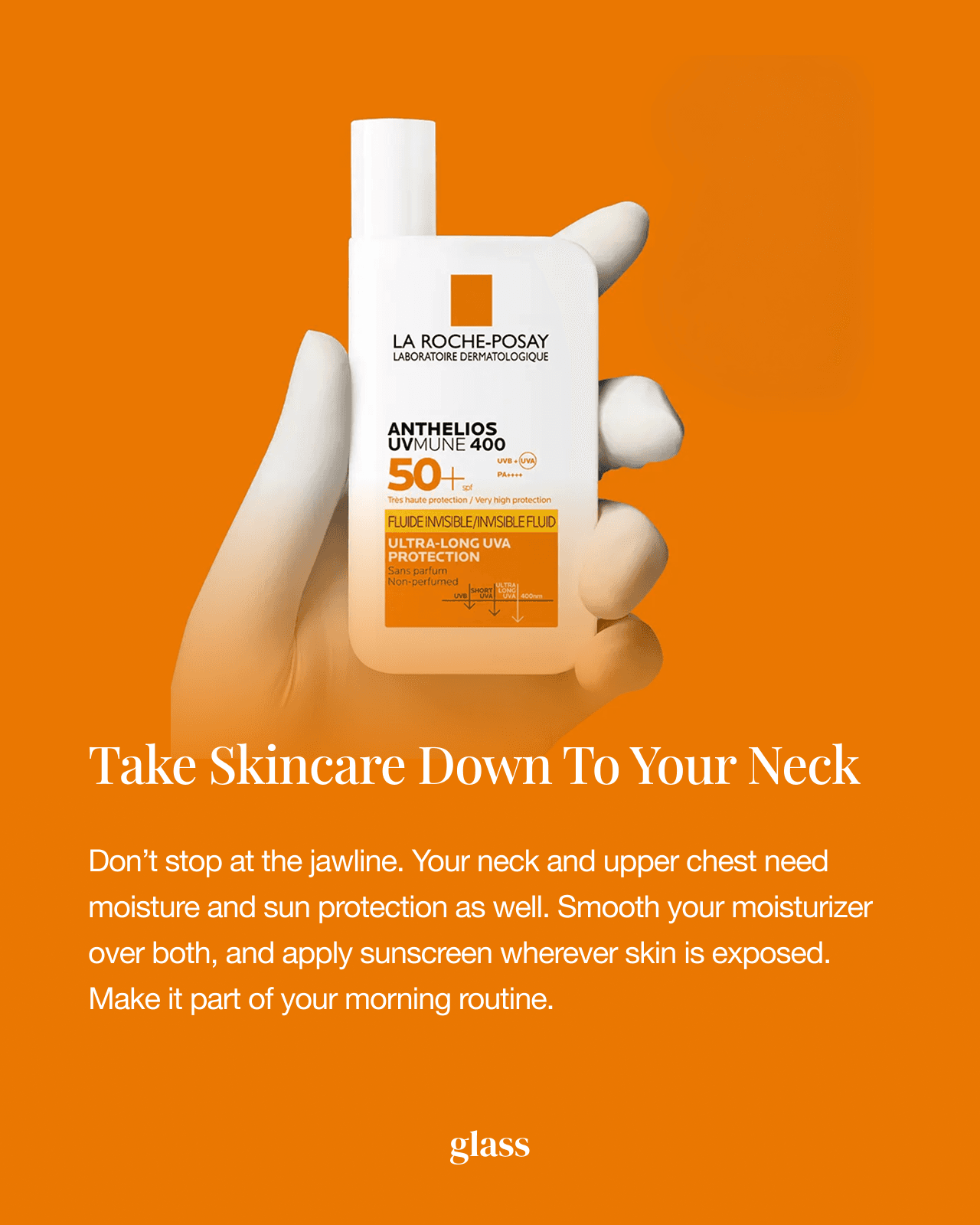
The AAD calls sunscreen and moisturizer the two most effective anti-aging products you can buy. Extending both by a few inches is the cheapest upgrade in this whole article. Make it part of your morning routine and it stops being a step at all.
Your 30s Skincare Starter Plan
| Habit | When | How to start |
|---|---|---|
| Retinol | Night | Gentle formula, two or three nights a week, moisturizer after |
| Eye cream | Morning and night | A tiny amount, patted on with your ring finger |
| Neck and chest | Every morning | Moisturizer plus SPF 30 or higher on all exposed skin |
Start one habit at a time, a couple of weeks apart, so you can tell how your skin responds to each. Every skin is different, and results vary. If irritation does not settle, or you are pregnant, nursing or managing a skin condition, ask a board-certified dermatologist before adding a retinoid.
The Glass Beauty Seoul Take
The best skin we see in Seoul in women's 30s does not come from one miracle product. It comes from consistency started early — retinol introduced gently, eye care treated as its own step, and sunscreen worn like a habit, not a vacation accessory. The routines we admire there rarely stop at the jawline, and that small detail shows up years later.
Your 30s are the right time to start because nothing is urgent yet. You are not correcting damage; you are slowing it down. That is cheaper, gentler and far easier than catching up at 45.
When topical care reaches its limit, that is the moment to look at what a clinic can add. Our guide to skin treatments in your 30s covers what is worth booking. Until then, pick one habit from this list and start it tonight. If you want a quick check on the basics, take our skincare score quiz — and share this with a friend who just turned 30.
Glass Beauty Seoul is building the most honest guide to Korean skin care and treatment for readers outside Korea. Follow along as we break down what Seoul knows first.
Questions.
What skincare should I start in my 30s?+
Start with three habits: a gentle retinol at night two or three times a week, a dedicated eye cream, and moisturizer plus broad-spectrum SPF 30 or higher on your face, neck and chest every morning. Add them one at a time so you can see how your skin responds.
Should I use retinol in my 30s?+
For most people, yes. Retinol supports collagen and can reduce the look of fine lines and uneven tone. Start with a gentle formula every other night or two to three nights a week, use moisturizer after, wear sunscreen daily, and avoid it if you are pregnant or trying to conceive.
Do I really need an eye cream?+
The skin around your eyes is the thinnest on your body, so it dries out and shows fine lines early. An eye cream with retinol, peptides or hyaluronic acid targets those concerns more directly than a plain moisturizer. Pat a tiny amount on with your ring finger.
Should I put sunscreen on my neck?+
Yes. Neck skin can be thinner and more sensitive than facial skin, and it gets the same sun. Cleveland Clinic dermatologist Dr. Shilpi Khetarpal recommends broad-spectrum SPF 30 or higher on your face, neck, chest and any other exposed skin.
Is peeling from retinol normal?+
Some dryness, redness or light peeling in the first weeks is common and usually fades as your skin adjusts. Use retinol less often and moisturize after; if irritation does not settle, see a board-certified dermatologist.