Sun Spot Removal in Korea: Why Fall Is When to Treat
The spots summer left behind are old sun damage surfacing. Here's how to confirm them, which laser clears them, and why now is the time.

The spots that showed up on your cheeks this summer aren't new. They're years of sun exposure finally reaching the surface — and the next few months are the best time all year to clear them.
Sun spot removal is one of the fastest wins in dermatology. A well-defined brown spot often answers to a laser in one or two sessions. The catch is timing. Treat pigment while your skin is still tanned and still taking daily UV, and the spot can come back darker than before. Fall is when the math turns in your favor.
Here's how to tell whether what you have is a true sun spot, which device clears it, and what the same treatment costs in Seoul versus at home.
Why Fall Is the Window for Sun Spot Removal
Summer didn't create those spots so much as reveal them. Mayo Clinic describes sun spots — also called age spots, liver spots, or solar lentigines — as the result of UV light speeding up melanin production until pigment clumps in skin that has had years of exposure. A few months of strong sun is simply the push that makes old damage visible.
Treating them in July works against you for two reasons:
- Tanned skin competes with the target. A laser aims at melanin. When the skin around the spot carries extra pigment, the device has less contrast to work with, and the risk of burns and post-inflammatory hyperpigmentation — the darkening that follows irritation — goes up.
- Fresh UV undoes the work. After treatment, the spot crusts and the new skin underneath is vulnerable. Daily beach-level sun on healing skin is how pigment rebounds.
Clinics plan around this. The Toronto Dermatology Centre, for example, asks for four tan-free weeks before IPL on brown spots. As daylight softens in October and November, most people clear that bar without trying — and they get a full winter of low UV to heal before next summer.

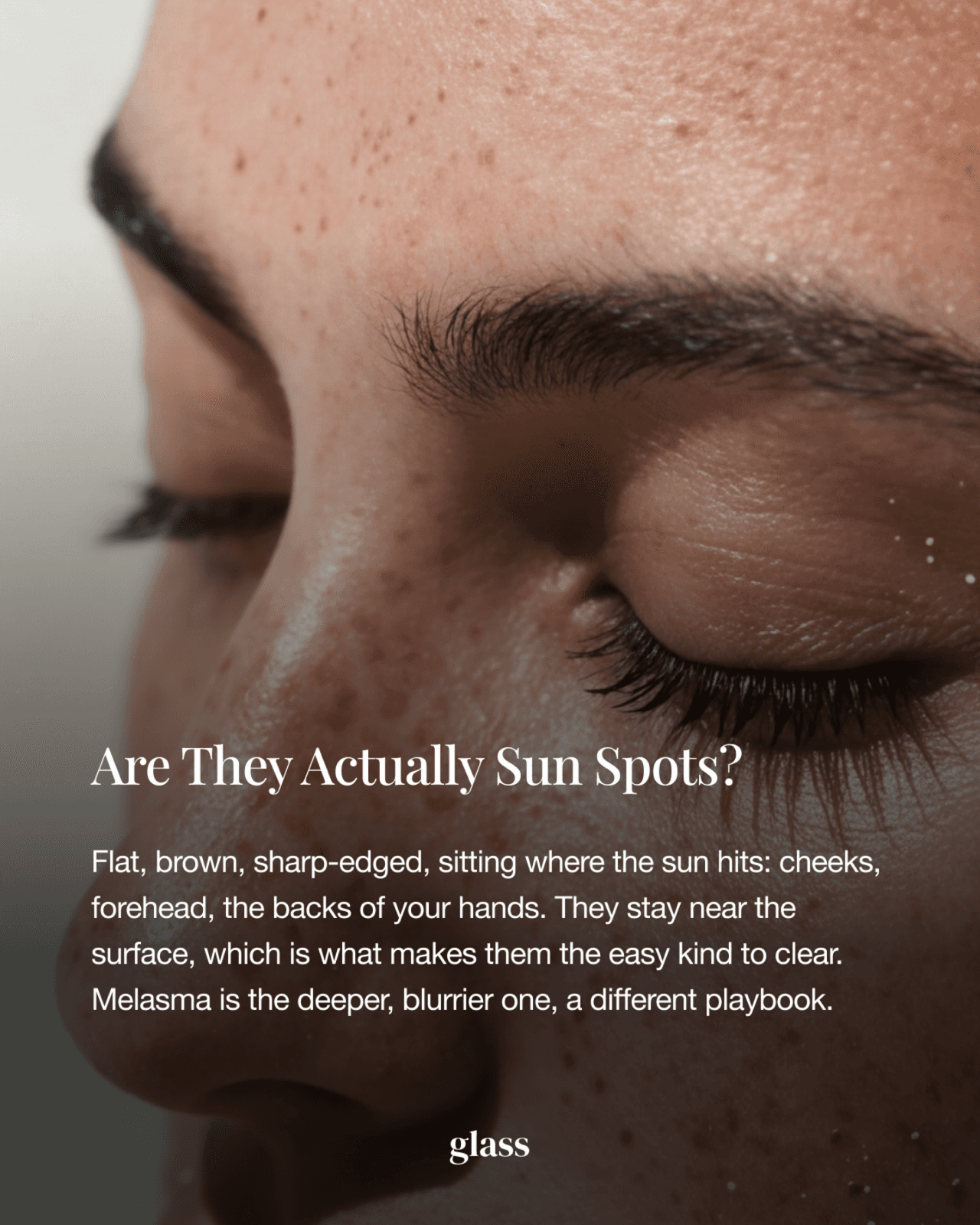
Sun Spot or Melasma? Know Which One You Have
Not every brown mark is a sun spot, and the difference decides the treatment.
| Sun spots (solar lentigines) | Melasma | |
|---|---|---|
| Edges | Sharp, well-defined | Blurry, patchy |
| Shape | Flat, oval, freckle-size to about half an inch | Broad patches, often symmetrical on both cheeks |
| Where | Wherever sun hits most — cheeks, forehead, backs of hands, shoulders | Cheeks, forehead, upper lip |
| Driver | Cumulative UV | UV plus hormones and visible light |
| Behavior | Doesn't fade in winter | Chronic; tends to relapse |
| Approach | Pigment laser or IPL, often one to three sessions | Long-term plan; aggressive spot lasers used cautiously |
Sun spots sit near the surface, which is what makes them the easy kind to clear. Melasma sits deeper and flares with heat and hormones, so a strong spot laser can make it worse. A 2025 global consensus on pigment disorders, summarized by Medscape, frames melasma as a chronic condition that needs maintenance, not a one-time zap.
One more reason to start with a consultation: a spot that is black, growing, irregular at the border, mixed in color, or bleeding is not a cosmetic question. Mayo Clinic and the American Academy of Dermatology both say to have new or changing spots examined first — some skin cancers look like age spots. A good clinic checks before it lasers.
Who it's for — and who should wait
Sun spot removal is a strong fit if your spots are flat, brown, and sharp-edged, a dermatologist has confirmed what they are, and you can keep the treated area out of direct sun for one to two weeks afterward.
Wait if you're pregnant, freshly tanned, heading to a beach in the next two weeks, or dealing with active melasma. And if any spot has changed recently, get it examined before you think about removing it.
Pico Laser vs IPL: Which One Clears Sun Spots
For true sun spots, Korean clinics reach for one of two tools.
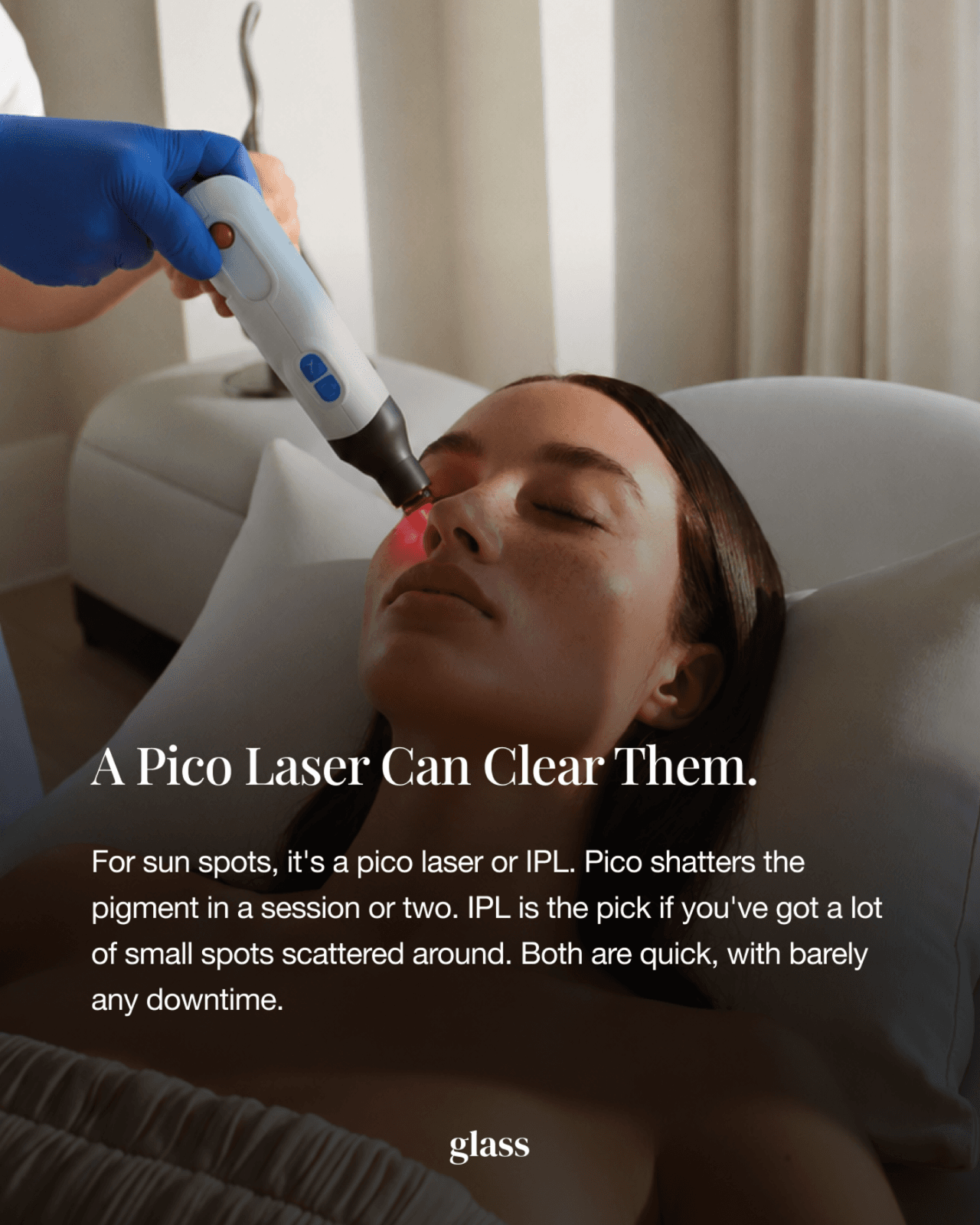
Pico laser fires pulses measured in trillionths of a second. That speed shatters pigment into fine particles the body clears over the following weeks, with little heat spread to surrounding skin. It suits a handful of distinct, sharp-edged spots — the kind you can point to one by one.
IPL (intense pulsed light) isn't a laser. It's broad-spectrum light filtered to target pigment and redness across a wide area. It suits a scatter of small spots and general sun-mottled tone — the "my whole cheek looks speckled" problem.
| Pico laser | IPL | |
|---|---|---|
| Best for | Distinct, well-defined spots | Many small, scattered spots and uneven tone |
| Treatment | Targeted shots, spot by spot | Passes across a whole area |
| What you see after | Spots darken, then micro-crust | Spots darken, then fade over the following weeks |
| Social downtime | Crusts shed in about 5–7 days | Mild redness for a few hours |
| Deeper skin tones | Settings adjusted to skin type | Used with caution — higher risk of rebound pigment |
How many sessions? The AAD says one or two laser treatments can clear age spots, with longer-lasting results than fade creams. Mayo Clinic puts laser and IPL at two to three sessions. Both flag the same short-term side effects — crusting and temporary darkening — which fade quickly. The consensus guideline goes further: for established sun spots in fair skin, lasers and IPL are first-line treatments and outperform freezing and topical creams.
Two expectations to set before you book. First, deeper or widespread sun damage takes longer — some Seoul dermatologists plan a series of gentle sessions rather than one aggressive round. Second, the IPL and short-wavelength caution for deeper skin tones is real; the consensus names it specifically as a risk for post-inflammatory hyperpigmentation. Ask which device and which settings a clinic is choosing for your skin, and why.
What happens in the chair
At a pigment-focused Seoul clinic, the visit usually runs in this order: a consultation with skin analysis to map the spots, a cleanse, the laser or IPL passes — often ten to twenty minutes for spot work — then a calming step and sunscreen before you leave. You walk out with small darkened dots where the spots were. That darkening is the pigment breaking up, not the treatment failing.
What Sun Spot Removal Costs in Seoul vs the US
Price isn't the reason to choose a clinic, but it does change what's realistic — especially if the treatment needs more than one session.
| Seoul | US | |
|---|---|---|
| One session (pico or IPL) | About $50–$150 | About $300–$600 |
| Individual spots | Often priced per spot | Often $150–$300 per session |
Seoul figures reflect published price lists from Gangnam dermatology clinics; US ranges come from published medspa pricing for IPL photofacials and sun spot laser sessions. Expect variation by device, number of spots, and neighborhood.
The more useful number is experience. Pigment is everyday work in Seoul — clinics run the newest pico devices and treat pigment all day. That depth of practice with melanin is worth as much as the savings. If you're planning a Seoul trip around it, read our guide to finding the right skin clinic in Seoul before you book anything.

How to Keep Sun Spots From Coming Back
Clearing a spot doesn't stop the process that made it. Here is what keeps the result:
- Plan around your flight. Crusts need about a week to shed, and fresh skin needs one to two weeks out of direct sun. Book early in a Seoul trip, not the day before you fly — our pre-event treatment timeline covers the same logic for weddings and big dates.
- Don't pick. Darkened spots and crusts should fall off on their own. Picking invites rebound pigment.
- Sunscreen every day, all year. Mayo Clinic and the AAD call for broad-spectrum SPF 30 or higher after treatment. The pigment consensus goes to SPF 50 for pigment-prone skin and recommends tinted formulas that also block visible light. Apply about a quarter teaspoon for the full face.
- Maintain with a brightening routine. Niacinamide, vitamin C, arbutin, and retinoids don't replace a laser, but they help keep new pigment in check between seasons. Our Korean night skincare routine shows where they fit.
Results vary by skin type, depth of pigment, and sun habits. This is editorial information, not personal medical advice.
The Glass Beauty Seoul Take
Sun spots are the rare skin concern with a clean answer: an accurate diagnosis, the right device, and a season that works with you. The most common mistake isn't picking the wrong laser. It's booking in July, tanning through recovery, and deciding the treatment failed.
Fall fixes that. Get the spot checked, confirm it's a sun spot and not melasma, and choose a clinic that explains why it's using pico or IPL on your skin. If Seoul is already on your calendar, pigment is one of the treatments where the city's volume and experience show most clearly. If it's not, the timing advice holds at home.
If this summer left its mark, the question isn't whether it can be cleared. It's whether you'll do it before next summer arrives.
Glass Beauty Seoul is building the definitive guide to Korean skin treatments for American readers — what they are, what they cost, and where to get them done right. Follow along as we break down every treatment worth knowing.
Frequently Asked Questions
What is the best time of year to remove sun spots?+
Fall and winter. Lasers and IPL target pigment, so a recent tan lowers contrast and raises the risk of burns and rebound darkening, and fresh UV exposure on healing skin can bring spots back. Some clinics ask for four tan-free weeks before IPL.
Is pico laser or IPL better for sun spots?+
Pico laser suits a few distinct, sharp-edged spots because it shatters pigment spot by spot. IPL suits many small, scattered spots and general sun-mottled tone because it treats a whole area at once. IPL is used with more caution on deeper skin tones.
How many sessions does sun spot removal take?+
The American Academy of Dermatology says one or two laser treatments can clear age spots, and Mayo Clinic puts laser and IPL at two to three sessions. Deeper or widespread sun damage can need a longer series of gentle sessions. Results vary by skin and pigment depth.
How much does sun spot removal cost in Seoul?+
A pico or IPL session in Seoul typically runs about $50 to $150, depending on the device and the number of spots. Comparable sessions in the US usually cost about $300 to $600. Ask for a written quote before you book.
How can I tell a sun spot from melasma?+
Sun spots are flat, oval, and sharp-edged, appearing where the sun hits most. Melasma forms blurry, often symmetrical patches driven by UV, hormones, and visible light, and it can worsen with aggressive spot lasers. A dermatologist should confirm which you have before treatment.
Get the Seoul Glow
K-beauty insights, treatment guides, and trend alerts — delivered weekly.