Juvelook: The Skin Booster You Can Only Get in Korea
Korea's most requested collagen-stimulating treatment — what it does, what it costs, and why people fly to Seoul for it
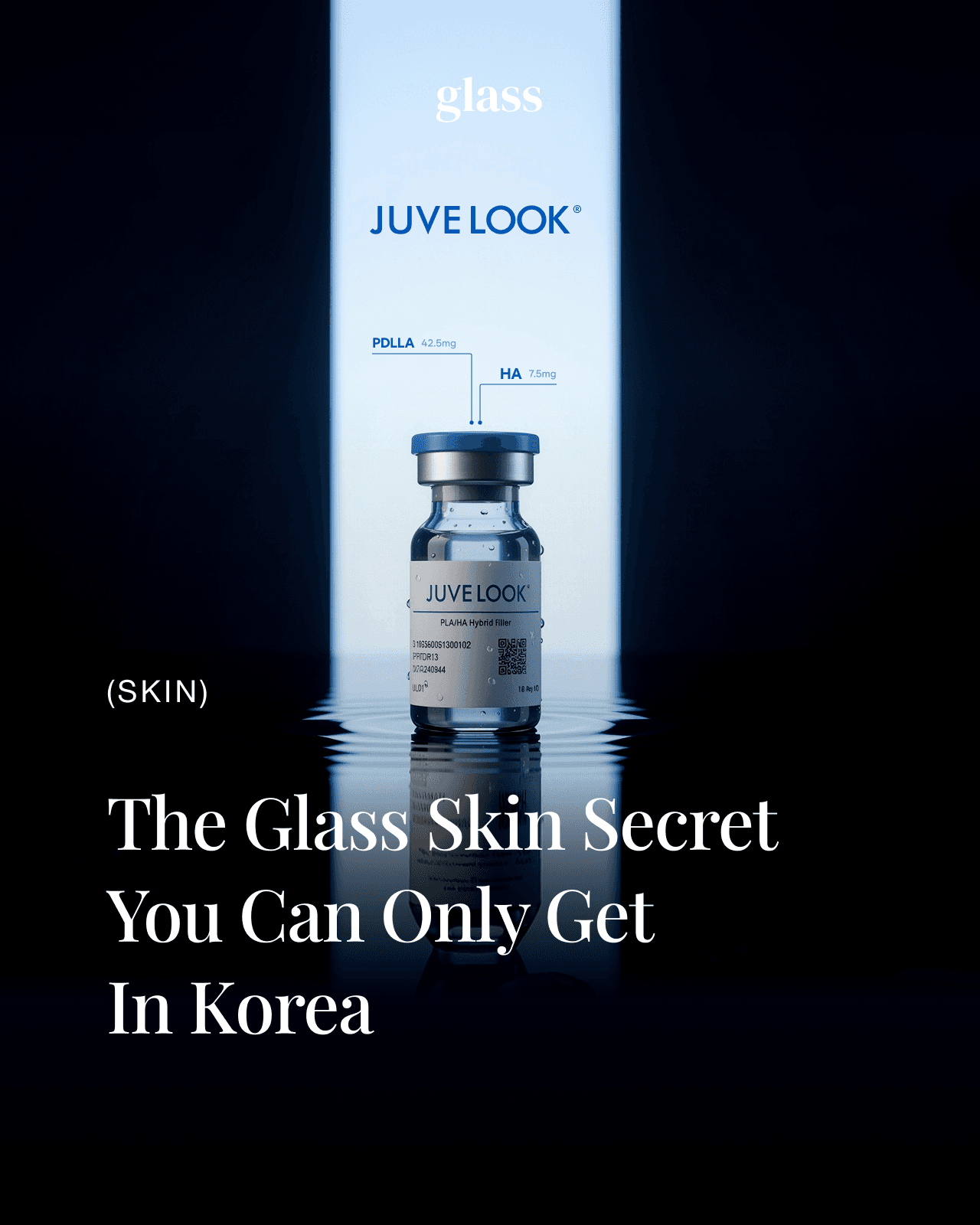
One of the most searched skin treatments in the US right now is one you can't actually get there.
Juvelook is a skin booster that combines PDLLA with hyaluronic acid — a dual-action injectable that hydrates your skin on contact and rebuilds collagen over the following months. Korean dermatology clinics have been using it for years. It's not FDA-approved in the United States. For now, Seoul is where you get it.
That hasn't stopped the demand. Search interest for "juvelook" has surged in the US, and a growing number of Americans are booking it as part of their Seoul itinerary — alongside clinic visits they hadn't considered before.
What Is Juvelook?
Juvelook is a bio-stimulating skin booster developed by HUGEL, a South Korean pharmaceutical company behind some of Korea's most widely used aesthetic injectables. It packs two active ingredients into one vial — PDLLA (poly-D,L-lactic acid) at 42.5 mg and hyaluronic acid at 7.5 mg.
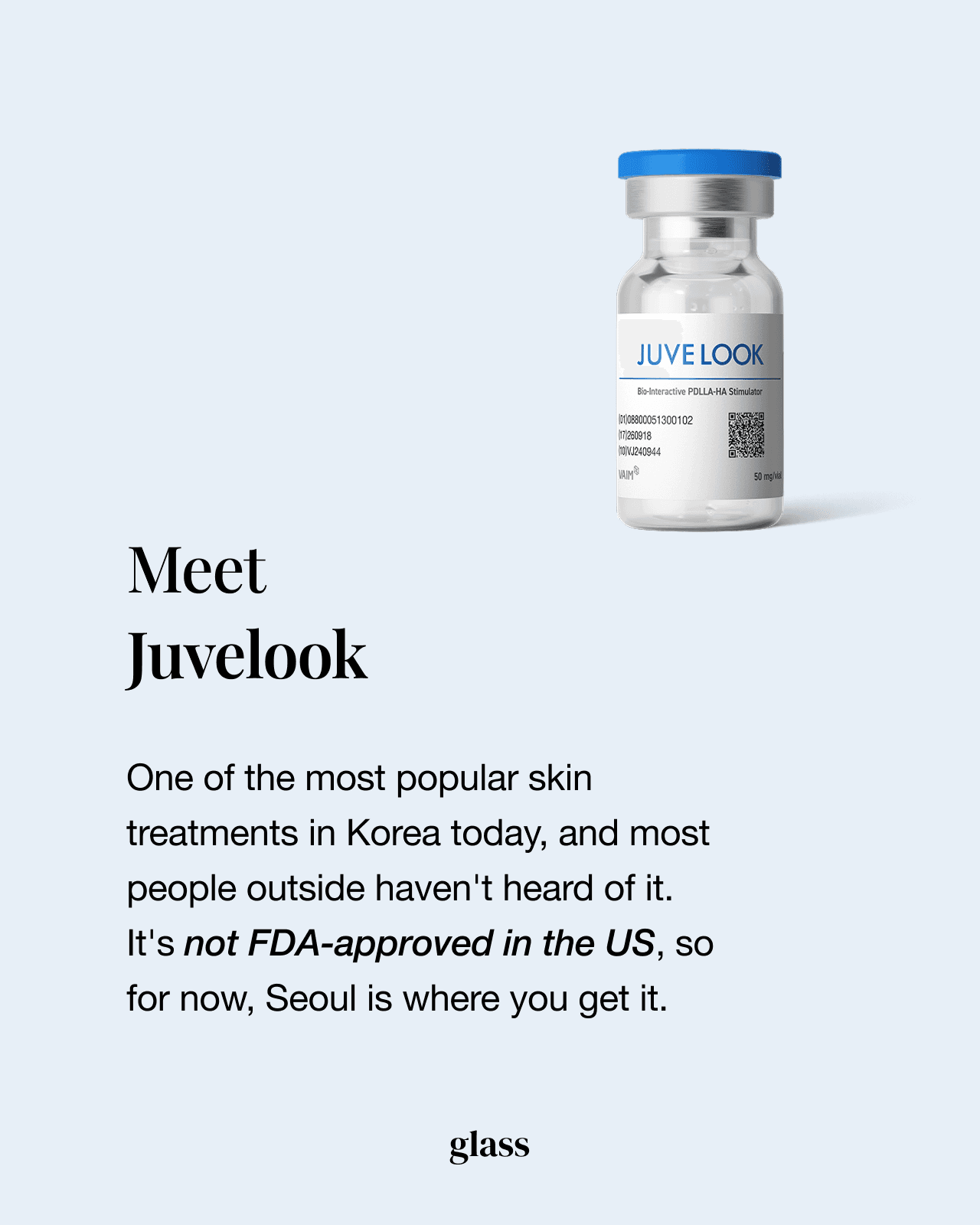
It is not a filler. Fillers add volume beneath the skin to reshape contours. Juvelook works differently — it triggers your skin to produce new collagen from the inside out while delivering an immediate hydration boost from the HA component.
The result is firmer, dewier skin without the puffiness or "overfilled" look that traditional fillers can produce. Clinics across Seoul use it for dullness, fine lines, enlarged pores, and early signs of aging — the kind of concerns that topical products manage but rarely reverse.
Because Juvelook lacks FDA clearance in the US, American dermatologists don't carry it. A small number of clinics in Singapore, Japan, and parts of Europe offer it, but Korea is where the treatment was developed, where practitioners have the deepest experience, and where the pricing makes a multi-session protocol realistic.
How It Works — Hydrate, Then Rebuild
Juvelook's two ingredients work on two different timelines.
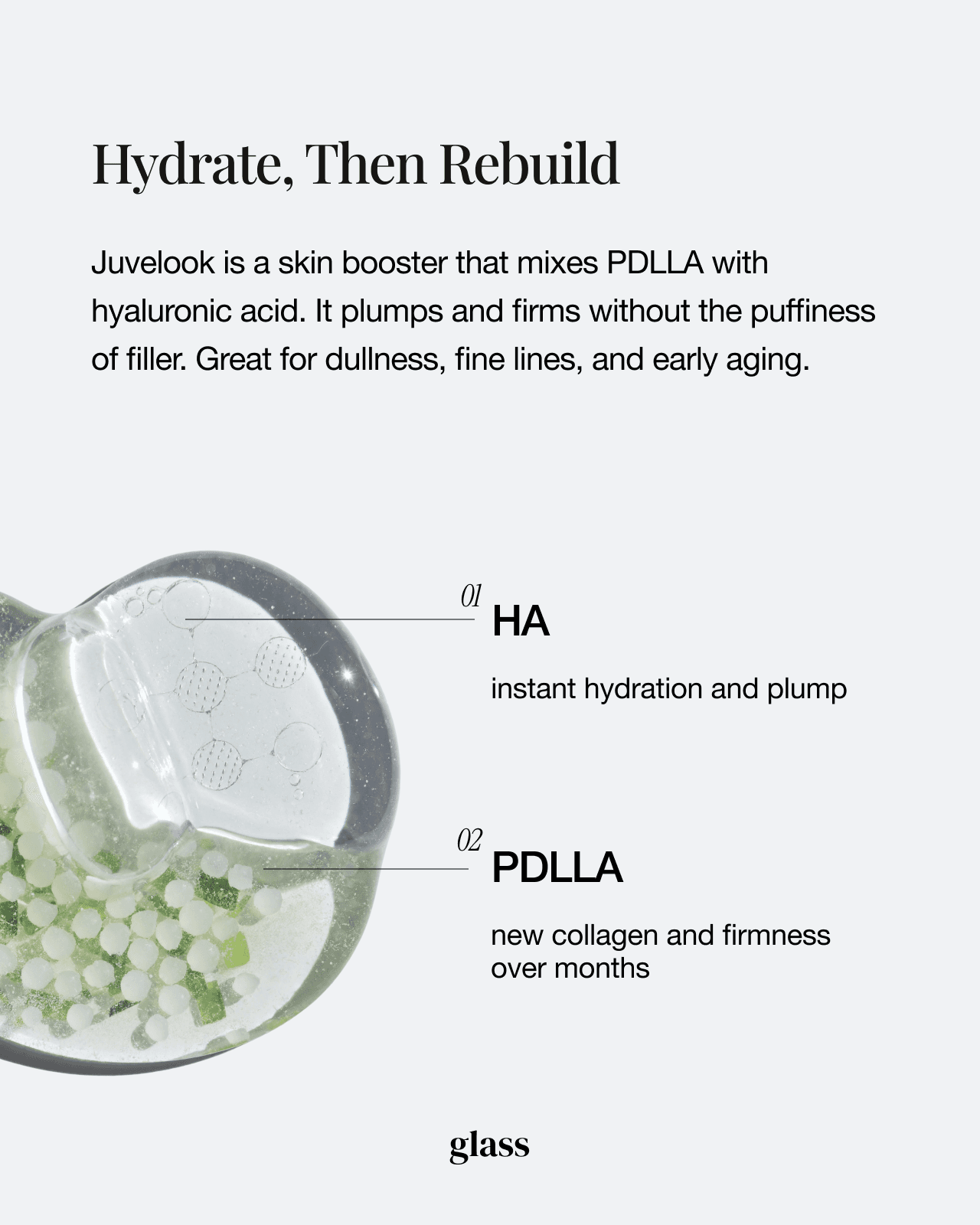
Hyaluronic acid delivers instant results. It binds water in the dermis, giving you visibly smoother and more hydrated skin within days. This effect fades as the HA naturally absorbs over a few weeks — but it bridges the gap while the second ingredient does its real work.
PDLLA is the long game. These ultrafine polymer particles — measuring just 2 to 5 micrometers — settle into the dermis and stimulate fibroblast activity. Fibroblasts are the cells that produce collagen and elastin, the two proteins responsible for skin firmness and bounce.
Over two to three months, your skin builds new structural protein around the PDLLA particles. The particles themselves dissolve safely and completely, leaving nothing behind but the collagen they triggered. That rebuilt collagen lasts 12 to 18 months.
This dual mechanism is what separates Juvelook from a standard HA skin booster or a pure bio-stimulator like Sculptra. You get immediate gratification and long-term structural repair in a single injection — which is why Korean clinics reach for it more often than either alternative alone.
Juvelook vs. Sculptra — Why They're Not the Same
This is the most common question — and the answer determines which treatment actually fits your goals.
Both stimulate collagen. But they use different materials, target different concerns, and behave differently under the skin.
| Juvelook | Sculptra | |
|---|---|---|
| Active ingredient | PDLLA + hyaluronic acid | PLLA (poly-L-lactic acid) |
| Particle size | Ultrafine (2–5 μm) | Larger (40–63 μm) |
| Primary target | Skin texture, fine lines, pores, glow | Deep volume — cheeks, temples, jawline |
| Under-eye use | Yes — fine particles, lower lump risk | Generally avoided — coarse for thin skin |
| Immediate effect | Yes — HA hydrates on contact | No — results develop gradually |
| Results timeline | 2–3 months for collagen peak | 3–6 months for full volume |
| Duration | 12–18 months | Up to 24 months |
| Sessions | 3 (monthly intervals) | 2–3 (6–8 weeks apart) |
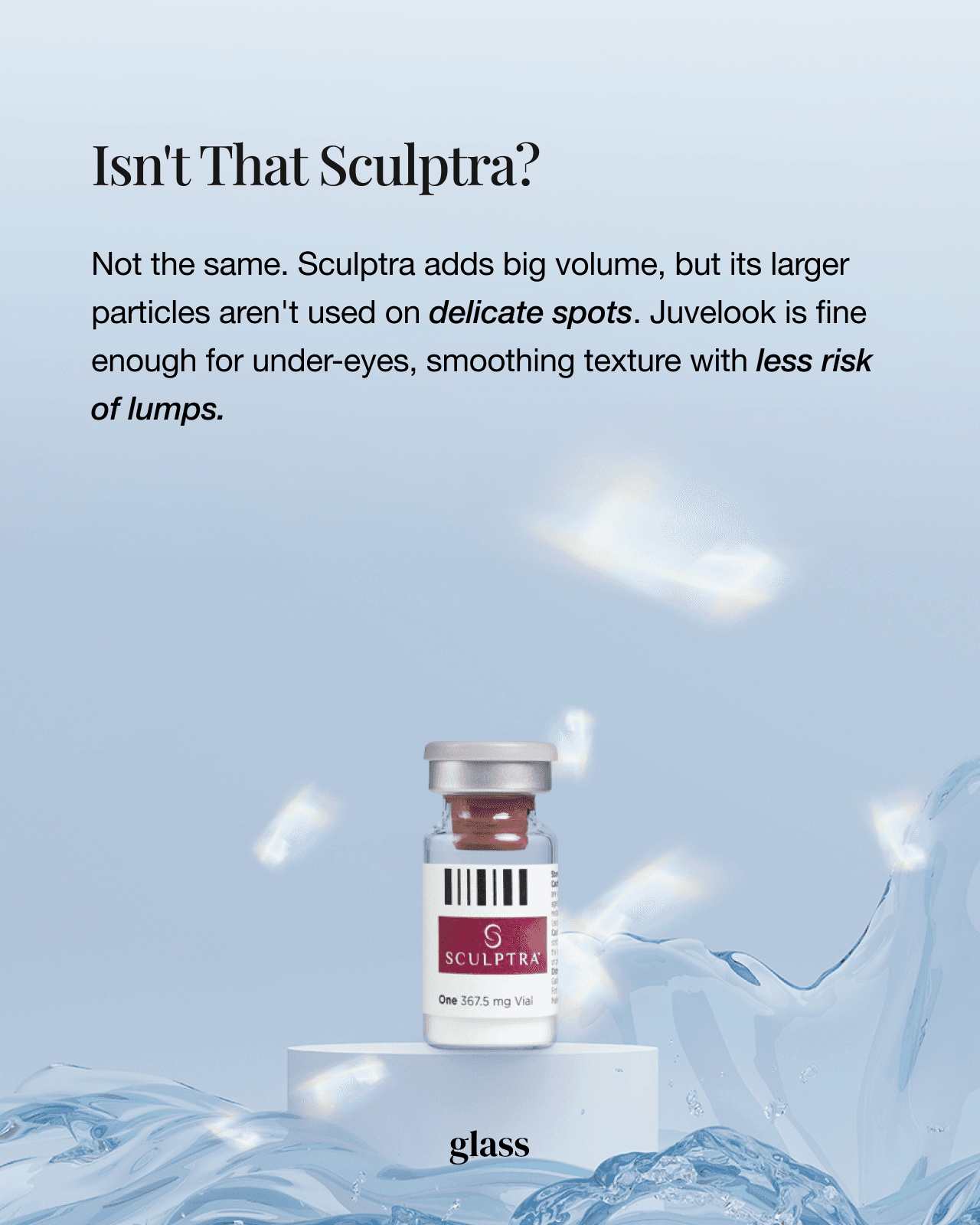
The distinction matters most for the under-eye area. Sculptra's larger PLLA particles carry a meaningful risk of nodule formation in thin-skinned zones — which is why most experienced practitioners won't inject it near the eyes. Juvelook's ultrafine PDLLA particles were designed specifically to work in delicate areas without that risk.
Sculptra is the right choice when you need to restore significant volume — hollow cheeks, sunken temples, deep nasolabial folds. It's a structural rebuilding tool.
Juvelook is for skin quality. Dullness, texture, fine lines around the eyes, the kind of firmness that makes skin look lit from the inside — that's Juvelook's territory.
They're not interchangeable. They're complementary. Many Korean clinics use both in the same treatment plan — Sculptra for volume restoration, Juvelook for surface-level skin quality.
What a Session Looks Like
A Juvelook session in Seoul takes about 30 to 40 minutes, including prep.
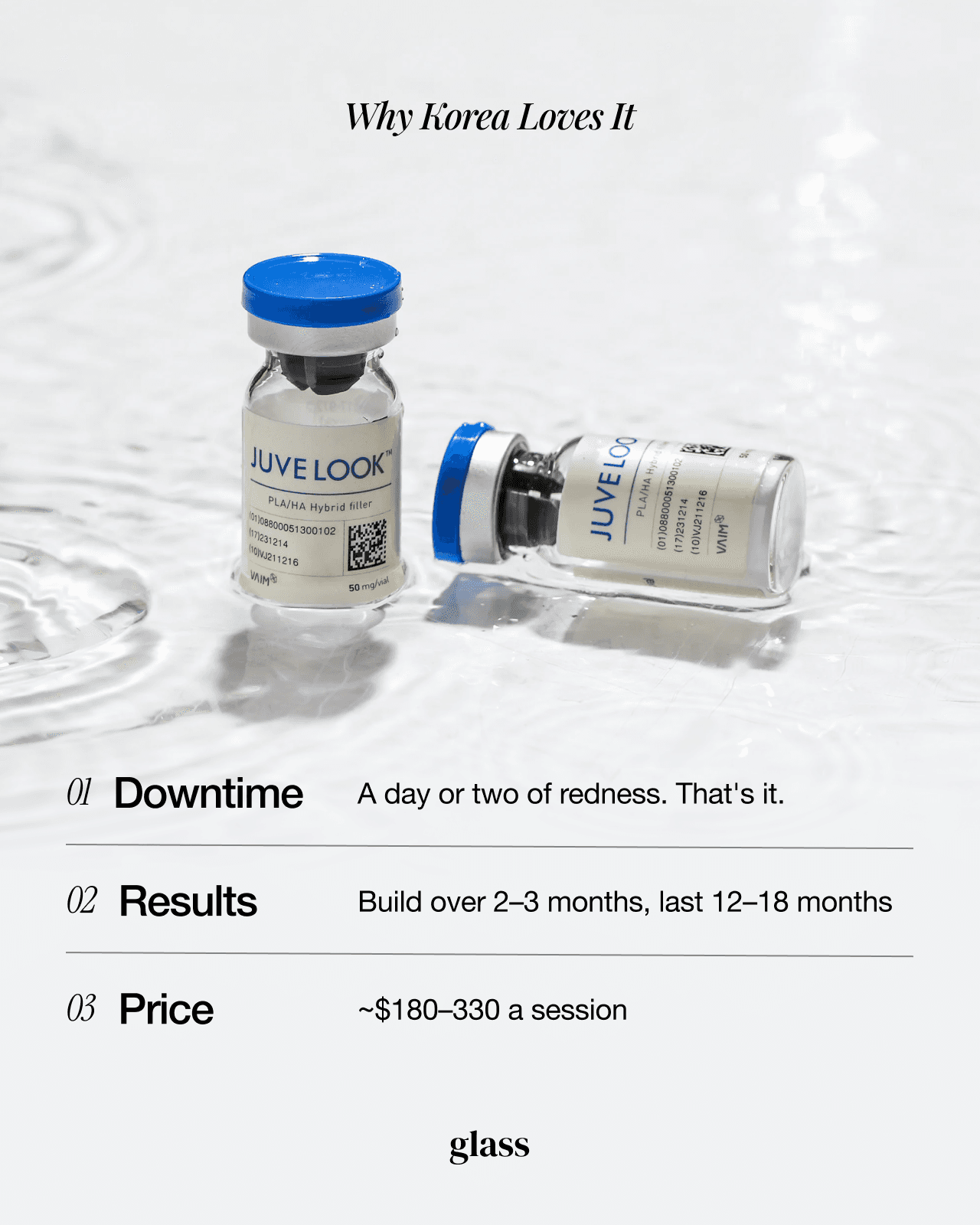
The clinic applies numbing cream for 15 to 20 minutes. The practitioner then injects small amounts of Juvelook across the treatment area — full face, under-eyes, or targeted zones — using a fine needle or cannula depending on the area and clinic protocol.
Downtime is minimal. A day or two of mild redness and slight swelling at injection sites. Most people return to their normal routine the same day. No bandaging, no significant bruising for most patients, and no restriction on skincare products after the first 24 hours.
Results arrive in two waves. The HA component delivers a visible glow and smoother texture within the first week. The collagen rebuild — the part that truly changes your skin — becomes apparent at the two-to-three-month mark. That effect lasts 12 to 18 months.
Most Korean clinics recommend three sessions spaced four weeks apart for optimal results. A single session produces noticeable improvement, but the cumulative effect of three is where the treatment reaches its full potential. This is why many medical tourists plan a three-week Seoul trip and schedule one session per week.
Who Is This For?
Juvelook works best for people dealing with:
- Dull, tired-looking skin that doesn't respond to topical products alone
- Fine lines — especially around the eyes and forehead
- Enlarged pores and uneven skin texture
- Early volume loss that doesn't warrant a full filler treatment
- The desire for natural-looking "glass skin" without heavy product layering
It's a preventive and corrective treatment — not a dramatic transformation. If you need visible contouring or deep wrinkle correction, a dermal filler or Sculptra is more appropriate. Results vary based on skin condition, age, and individual response.
What It Costs — And Why People Book It Into a Korea Trip
Here's where the Korea advantage becomes hard to ignore.
| Korea (Seoul) | US (comparable treatment) | |
|---|---|---|
| Single session | $180–330 | $800–1,500 |
| 3-session course | $540–990 | $2,400–4,500 |
| Potential savings | — | $1,400–3,500 |
The savings on a three-session course can cover a round-trip flight from most US cities. That math isn't lost on the growing number of Americans who schedule skin treatments alongside sightseeing and shopping — a pattern driving Korea's medical tourism numbers past two million visitors a year.
Korean clinics have performed tens of thousands of Juvelook sessions since its launch. The practitioner experience here is measured in years and case volume that clinics in other countries haven't accumulated yet.
This isn't about finding a bargain. It's about getting the treatment where it was developed, from the practitioners who know it best, at a price that makes a full three-session protocol financially realistic.
The Glass Beauty Seoul Take
Juvelook is a case study in how Korean dermatology keeps pulling ahead.
A Korean company developed the formulation. Korean clinics refined the injection protocols. Korean patients became the world's first large-scale user base — and the results were strong enough that international demand built before regulators in other countries caught up.
That's the pattern. Korea builds it, Korea perfects it, the rest of the world follows. PDRN went through the same cycle. So did the entire concept of skin booster culture — a treatment category that barely existed outside Asia a few years ago.
If you've been researching Juvelook, the fundamentals are clear. The treatment is mature — years of clinical use, predictable outcomes, minimal downtime. The price in Seoul makes a full protocol realistic on most budgets. And the clinics performing it have more reps than practitioners anywhere else in the world.
The question isn't whether Juvelook works. It's whether you want to wait for the FDA — or go where it's already been proven.
Glass Beauty Seoul is building the guide to Korean skin treatments — real procedures, real prices, real results. Follow along as we break down everything worth knowing before your next Seoul trip.
Frequently Asked Questions
Is Juvelook FDA-approved?+
Juvelook is not FDA-approved in the United States. It is approved in South Korea and widely used across Korean dermatology clinics. For now, Seoul remains the primary destination for international patients seeking the treatment.
How long does Juvelook last?+
Results build over two to three months as PDLLA stimulates new collagen production. The effects typically last 12 to 18 months. Most clinics recommend a course of three sessions spaced four weeks apart for optimal results.
Is Juvelook the same as Sculptra?+
No. Both stimulate collagen, but they use different materials and target different concerns. Sculptra uses PLLA for deep volume restoration in areas like cheeks and temples. Juvelook uses finer PDLLA particles combined with hyaluronic acid, making it suitable for delicate areas like under the eyes and for improving overall skin texture.
Can you get Juvelook under the eyes?+
Yes. Juvelook's ultrafine PDLLA particles make it one of the few collagen-stimulating treatments safe for the under-eye area. Sculptra's larger particles carry a higher risk of nodule formation in thin-skinned zones, which is why most practitioners avoid using it there.
How much does Juvelook cost in Korea?+
A single session in Seoul typically costs $180 to $330. A three-session course runs $540 to $990. Comparable collagen-stimulating treatments in the US can cost $800 to $1,500 per session, making the savings significant enough to offset travel costs for many patients.
Get the Seoul Glow
K-beauty insights, treatment guides, and trend alerts — delivered weekly.